
Is osteri vegan?
Osteri is a non-vegan food ingredient.
Checking out an ingredients list? 👇
Vegan Ingredient Checker
Scan labels, check if ingredients are vegan
"You are amazing, this has saved me so much time when grocery shopping!"
— Austin, a user who reached out with feedback
"It's been a great tool since starting my journey! You take a pic of the nutrition/ingredients, and it'll warn you of anything questionable or not vegan. 😁"
— Ashe, a Vegan For Beginners Facebook Group member
"Use a vegan app when you go shopping, I use WhatsVegan."
— Dóra, a Vegan For Beginners Facebook Group member


Learn more
"You are amazing, this has saved me so much time when grocery shopping!"
— Austin, a user who reached out with feedback
"It's been a great tool since starting my journey! You take a pic of the nutrition/ingredients, and it'll warn you of anything questionable or not vegan. 😁"
— Ashe, a Vegan For Beginners Facebook Group member
"Use a vegan app when you go shopping, I use WhatsVegan."
— Dóra, a Vegan For Beginners Facebook Group member
So, what is osteri?
"Osteri" is the Finnish word for oyster, referring to a group of saltwater bivalve mollusks. These marine animals are harvested from ocean waters or raised in commercial aquaculture farms. Food manufacturers use whole oysters in canned seafood products, or they extract their juices and solids to create flavorings, broths, and condiments, most notably Asian-style oyster sauce. The term osteri appears on Finnish-language food packaging for canned shellfish, savory dipping sauces, marinades, instant noodle seasoning packets, and prepared frozen or chilled meals.
osteri is not vegan because it is derived entirely from animals. Biologically, oysters belong to the animal kingdom under the phylum Mollusca. A vegan diet excludes all forms of animal life, including marine mollusks, shellfish, and any derivatives produced from them. Any food product listing osteri contains animal tissue or extract and is therefore unsuitable for vegans. Plant-based alternatives, which typically utilize mushrooms to replicate the savory flavor profile of oyster sauce, are used instead for vegan formulations.
How to quickly find the source of ingredients like osteri?
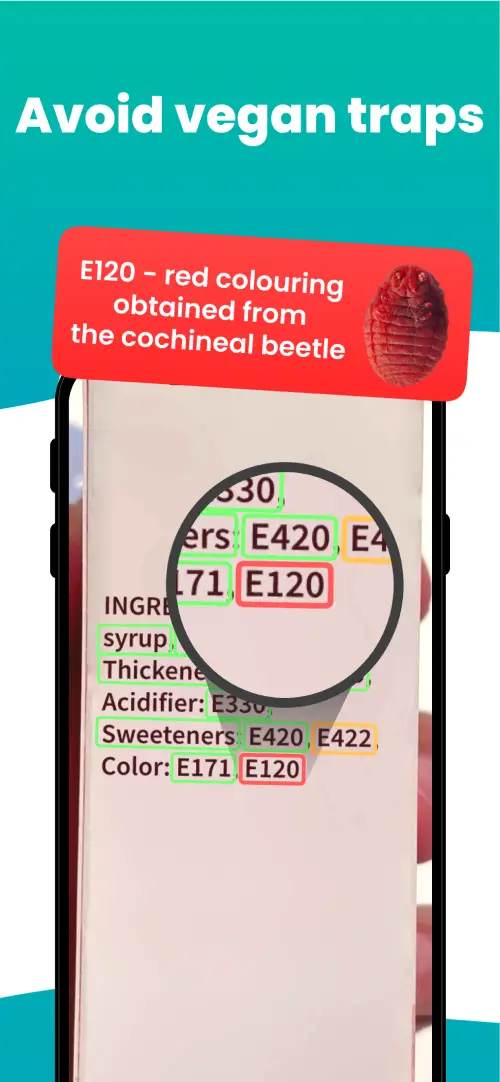
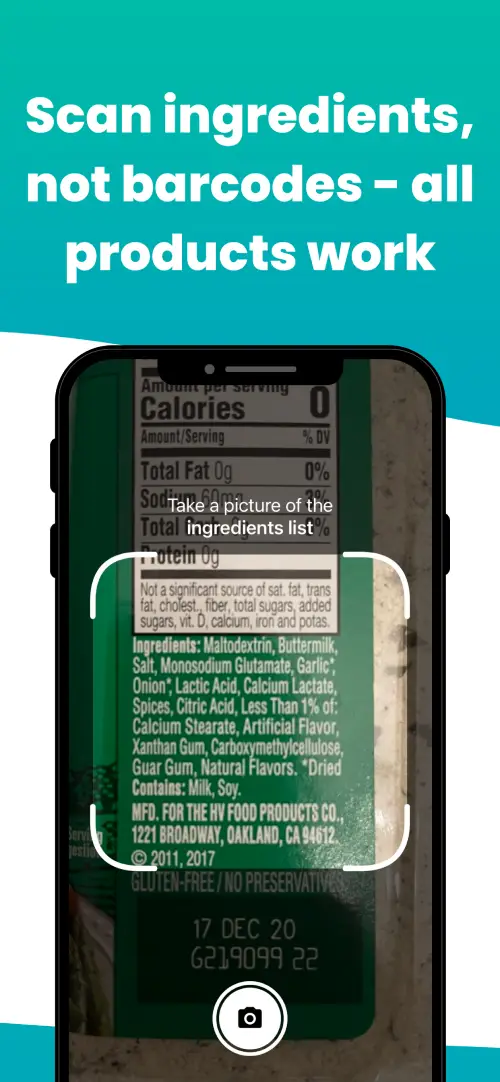
We've built a vegan ingredients scanner that classifies food ingredients as "vegan", "non-vegan", or "potentially vegan".
It allows you to avoid non-vegan ingredients - just take a picture of a product's ingredient list, and the app tells you if the product is vegan or not.

Check out other ingredients:
We'll never send you spam.