Is shellac e904 vegan?
Shellac e904 is a non-vegan food ingredient.
Checking out an ingredients list? 👇
Vegan Ingredient Checker
Scan labels, check if ingredients are vegan
"You are amazing, this has saved me so much time when grocery shopping!"
— Austin, a user who reached out with feedback
"It's been a great tool since starting my journey! You take a pic of the nutrition/ingredients, and it'll warn you of anything questionable or not vegan. 😁"
— Ashe, a Vegan For Beginners Facebook Group member
"Use a vegan app when you go shopping, I use WhatsVegan."
— Dóra, a Vegan For Beginners Facebook Group member


Learn more
"You are amazing, this has saved me so much time when grocery shopping!"
— Austin, a user who reached out with feedback
"It's been a great tool since starting my journey! You take a pic of the nutrition/ingredients, and it'll warn you of anything questionable or not vegan. 😁"
— Ashe, a Vegan For Beginners Facebook Group member
"Use a vegan app when you go shopping, I use WhatsVegan."
— Dóra, a Vegan For Beginners Facebook Group member
So, what is shellac e904?
Shellac, also designated by the E-number E904, is a natural resin commonly used as a food glazing agent. It is obtained from the secretions of the female lac insect, Kerria lacca, which is native to regions in India and Southeast Asia. The insects secrete this resin onto tree branches to form protective coatings. Harvesters scrape the encrusted bark and resin, which is subsequently washed, heated, filtered, and processed into dried flakes for commercial applications.
In the food industry, shellac functions to provide a glossy finish and prevent moisture loss. It is commonly found on confectionery items such as jelly beans, sprinkles, and chocolate-coated treats, as well as on the peels of fresh citrus fruits and apples. It also appears as a protective coating on nutritional supplements and medicinal tablets.
Shellac is not vegan because it is an animal byproduct derived directly from insects. Since the production process relies on harvesting material secreted by lac bugs, any ingredient listed as shellac or E904 is unsuitable for a vegan diet.
How to quickly find the source of ingredients like shellac e904?
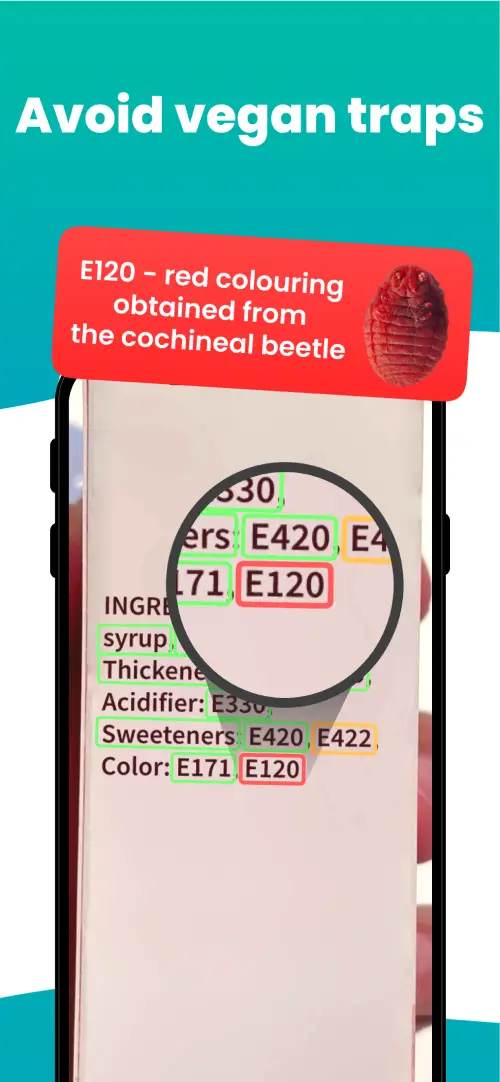
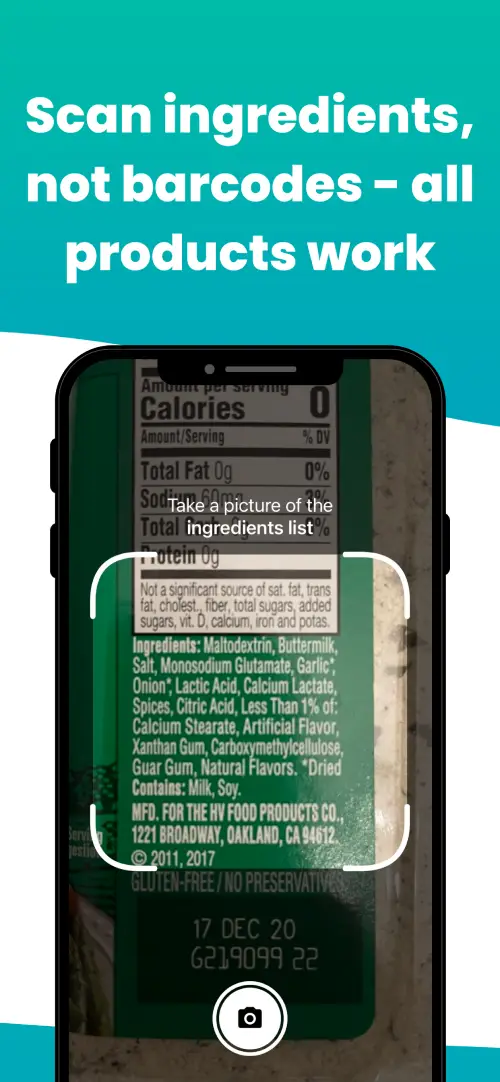
We've built a vegan ingredients scanner that classifies food ingredients as "vegan", "non-vegan", or "potentially vegan".
It allows you to avoid non-vegan ingredients - just take a picture of a product's ingredient list, and the app tells you if the product is vegan or not.

We'll never send you spam.