Are natural flavourings vegan? What the label can and can't tell you, with data from 14,411 labels
The short answer
Natural flavourings are often plant-based, but the label can't prove it. EU and US rules let them be made from meat, fish, milk or egg, and the source doesn't have to be printed. They count as vegan when the label names a plant source, the product has a vegan mark, or the manufacturer confirms it. WhatsVegan marks them as "depends" for that reason.
Natural flavourings are the most common "depends" ingredient there is. In 14,411 food labels scanned in the WhatsVegan app, they were on 5,199, or 36.1%. That is three and a half times as often as E471, the most common additive in our list of non-vegan E-numbers. On 94.6% of those labels, nothing said where the flavouring came from.
What the law allows
In the EU, a natural flavouring substance is one obtained "from material of vegetable, animal or microbiological origin" by physical, enzymatic or microbiological processes (Regulation 1334/2008, Article 3). The UK kept the same rules. Animal origin is written into the definition.
The US definition (21 CFR 101.22) is even more explicit. It lists spices, fruit, vegetables, yeast, herbs, bark, roots and leaves, and then meat, seafood, poultry, eggs and dairy products.
None of this means a given flavouring is animal-based. It means the word "natural" tells you how the flavouring was made, not what it was made from.
What the EU wording does tell you
EU and UK labels have to follow set wording (Article 16 of the same regulation), and the wording carries information:
- "Natural vanilla flavouring": at least 95% comes from the named source, here vanilla. If the source is a plant, so is the flavouring.
- "Natural vanilla flavouring with other natural flavourings": part of it comes from vanilla. The rest is not named.
- "Natural flavouring": made from several sources, none named.
- "Flavouring": not all of it qualifies as natural, or the maker chose not to use the word. The source is still not named.
US rules use different wording, so the 95% threshold does not apply to US labels.
How labels write it
Most labels in our data use the generic form. Some labels used more than one wording, so the rows overlap.
| How it is written | Notes | Labels in our data |
|---|---|---|
| Natural flavor / natural flavors | US wording, the most common by far | 2,938 |
| Natural and artificial flavor(s) | A mix; the label does not say which part is which | 761 |
| Natural flavouring(s) / natural flavour(s) | UK and EU wording | 574 |
| Flavouring(s) | EU wording when the flavouring is not natural, or the maker chose not to say | 658 |
Only 210 labels (4.0%) named a source food in the flavouring, most often smoke, vanilla or a fruit. 7 said the flavouring was vegan or vegetable. 69 named an animal food, such as "natural butter flavor" or "chicken flavouring". That names the taste, and sometimes the source, but a chicken-flavoured crisp can be seasoned with a flavouring made entirely from yeast and vegetables.
In other languages, look for natürliches Aroma (German), arôme naturel (French), aroma naturale (Italian), aroma natural (Spanish) and naturalny aromat (Polish). Our page on aromat covers the Polish word.
How much it matters
Of the 5,199 labels with natural flavourings, 1,109 (21.3%) also had an ingredient that is clearly animal-derived, most often milk or egg. The flavouring doesn't change the answer for those.
For the rest it often does. On 3,148 labels (60.6% of labels with natural flavourings, and 21.8% of all labels), there was no animal ingredient and no other "depends" ingredient. The flavouring was the only thing standing between the label and a clear vegan answer. Of the 5,931 labels that had no animal ingredient but still needed a second look, 3,148 were in that position because of the flavouring alone.
The allergen rule helps, partly
EU and UK rules (Regulation 1169/2011) require allergens to be declared even when they are used inside another ingredient, and to be emphasised, usually in bold. Milk and egg are on the list. So if a flavouring contains milk, the label must say so. US law has the same requirement for its major allergens, which also include milk and egg.
That rules out the two most common animal sources. It doesn't rule out meat, gelatin or other animal material that is not an allergen. Fish and crustaceans are allergens, so they would be declared too.
How to check a product
| What the pack shows | Example | What it means |
|---|---|---|
| Names a plant source | "natural vanilla flavouring", "natural lemon flavouring", "natural smoke flavour" | Under EU rules at least 95% of the flavouring comes from the named source. Vegan if the source is a plant. |
| Has a vegan mark | The Vegan Society trademark, V-Label vegan, or a similar certification | Vegan. The certifier checks flavourings like any other ingredient. |
| Milk or egg in bold | "flavouring (contains milk)", "natural butter flavour (milk)" | Not vegan. Allergens inside a flavouring must be declared. |
| Names an animal food | "chicken flavouring", "natural beef flavour", "cheese flavour" | Names the taste. It may or may not be made from the animal. Ask, or look for a vegan mark. |
| Just "natural flavouring" | "natural flavouring", "natural flavors", "flavouring" | Usually plant-based, but the label does not prove it. Ask the manufacturer. |
If you need to ask, be specific: "Are the natural flavourings in [product] free from animal-derived ingredients, including meat, dairy and egg?" A general answer about the brand is less useful than one about the product you have, because recipes differ between countries.
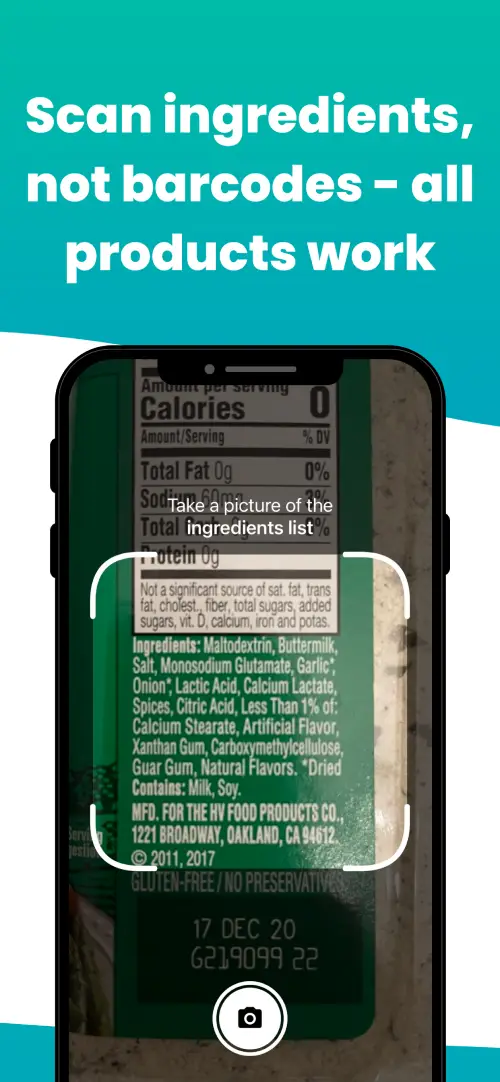
To check a whole label, paste it into the free vegan ingredient checker or scan it with the app. Both mark natural flavourings as "depends" and flag any milk, egg or other animal ingredient next to them.
Related ingredients
- Natural flavors: the US wording, same answer.
- Smoke flavouring: made by condensing wood smoke, so vegan in itself. Smoked-flavour products often contain meat or cheese, so read the rest.
- E471: the most common additive that can be plant or animal. See the E471 guide.
- Whey powder: often listed right next to flavourings in crisps and seasonings, and always from milk.
About the numbers
The counts come from 14,411 unique food and supplement ingredient lists scanned in the WhatsVegan app between June 2025 and October 2026, after removing duplicates and cosmetics. We counted natural flavourings whenever "natural flavo(u)r", "flavouring" or the German, French or Italian equivalent appeared, including inside brackets. This is the same count as in our label analysis. We counted a source as named only when a food or source word appeared in the flavouring itself, as in "natural vanilla flavouring". These are products people chose to scan, so they are not a random sample of what is in shops.
Common questions
Are natural flavourings vegan?
Often, but the label alone does not prove it. EU and US rules both allow natural flavourings to be made from animal material, such as meat, fish, milk or egg, and neither requires the source to be printed. A vegan mark, a named plant source, or an answer from the manufacturer settles it.
What are natural flavourings made from?
Under EU Regulation 1334/2008, natural flavouring substances come from material of vegetable, animal or microbiological origin, using physical, enzymatic or microbiological processes. Fruit, herbs, spices, yeast and fermentation all qualify, and so do meat, fish, milk and egg.
What does "natural vanilla flavouring" mean?
In the EU and UK, "natural X flavouring" means at least 95% of the flavouring comes from X. "Natural X flavouring with other natural flavourings" means only part of it does. Plain "natural flavouring" is used when the flavouring comes from several sources.
Would a label show milk in a flavouring?
Yes, in the EU, UK and US. Milk and egg are allergens, and allergens must be declared even when they are inside a flavouring. Meat, gelatin and other animal sources that are not allergens do not have to be named.
Are artificial flavourings vegan?
Flavouring substances that are not natural are made by chemical synthesis, so the substance itself is not taken from an animal. Labels do not list the carriers or solvents a flavouring is sold in, so a vegan mark or the manufacturer is still the only full answer.
Sources
- Regulation (EC) No 1334/2008 on flavourings, Article 3 (definitions) and Article 16 (use of the term "natural"): eur-lex.europa.eu
- Regulation (EU) No 1169/2011, Article 21 and Annex II (allergen declaration) and Annex VII Part D (designation of flavourings): eur-lex.europa.eu
- US FDA, 21 CFR 101.22, definition of natural flavor: ecfr.gov
- US FDA, Food Allergen Labeling and Consumer Protection Act (FALCPA): fda.gov
- The Vegan Society, Vegan Trademark standards: vegansociety.com