
Is aluminium powder vegan?
Aluminium powder is a vegan food ingredient.
Checking out an ingredients list? 👇
"You are amazing, this has saved me so much time when grocery shopping!"
— Austin, a user who reached out with feedback
"It's been a great tool since starting my journey! You take a pic of the nutrition/ingredients, and it'll warn you of anything questionable or not vegan. 😁"
— Ashe, a Vegan For Beginners Facebook Group member
"Use a vegan app when you go shopping, I use WhatsVegan."
— Dóra, a Vegan For Beginners Facebook Group member
So, what is aluminium powder?
Aluminium powder, a finely milled metallic substance, presents a straightforward case for ethical sourcing within the plant-based community. As an elemental metal, derived directly from the Earth's crust, its journey from ore to powder involves purely geological and industrial processes, entirely devoid of animal inputs or byproducts. This inherent quality places it firmly in the category of vegan ingredients, aligning perfectly with principles of animal ethics and purity.
The fundamental source of aluminium is bauxite ore, a rich sedimentary rock. Through a series of chemical and electrolytic steps, bauxite is refined into alumina (aluminium oxide), which is then processed further to yield pure aluminium metal. This metal is subsequently ground into the fine powder format used in various applications. At no stage in this production chain are animals utilized, nor are any animal-derived substances employed as processing aids, catalysts, or finishing agents. There's no concern about hidden animal fats in lubricants or bone char in filtration, unlike some other industrial ingredients that require diligent investigation.
For vegan consumers and formulators, this means aluminium powder is unequivocally cruelty-free by its very nature. It stands apart from many ingredients that necessitate careful scrutiny for gelatin, carmine, shellac, or even ambiguous "natural flavors" that might conceal animal origins. Its status as a purely inorganic material ensures a clean slate from an ethical standpoint.
While not a "plant-based alternative" in the sense of replacing a dairy or meat product, aluminium powder serves specific functional roles, particularly as a metallic pigment. In some regions, it's recognized as a food additive (E173) for decorative purposes on confectionery or bakery items, imparting a silver sheen. In these applications, its elemental origin remains the guarantee of its vegan compliance. The transparency of its source alleviates the need to investigate complex supply chains often associated with ingredients where cross-contamination with animal products or the use of animal-derived processing aids might be a concern.
Ultimately, for those committed to a plant-based lifestyle, aluminium powder is an example of an ingredient whose mineral foundation provides absolute assurance. Its presence in a product, when used appropriately, does not compromise the integrity of a vegan formulation. It underscores the importance of understanding the basic chemistry and processing of ingredients to confidently assert their alignment with animal welfare principles and uphold genuine label transparency for consumers seeking truly cruelty-free options.
How to quickly find the source of ingredients like aluminium powder?
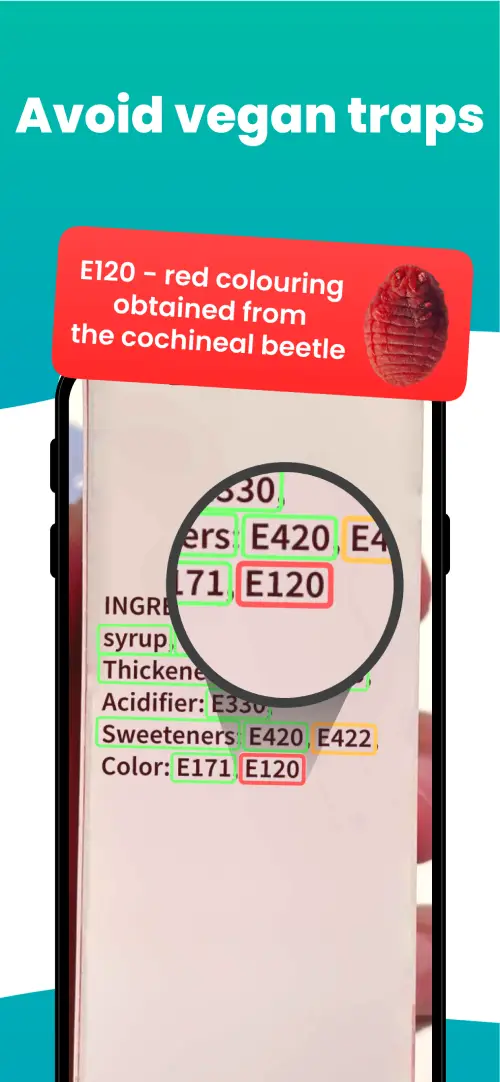
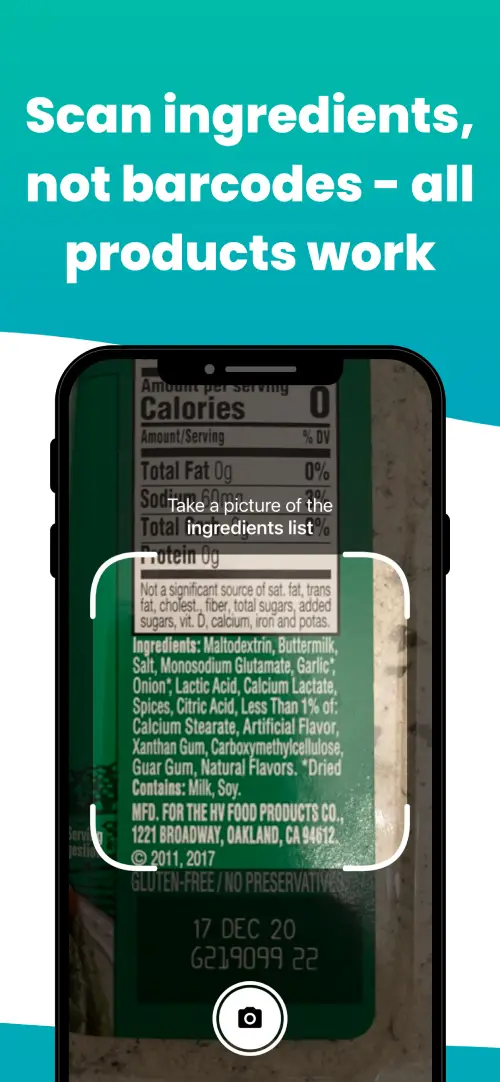
We've built a vegan ingredients scanner that classifies food ingredients as "vegan", "non-vegan", or "potentially vegan".
It allows you to avoid non-vegan ingredients - just take a picture of a product's ingredient list, and the app tells you if the product is vegan or not.



We'll never send you spam.