
Is carboxyméthylcellulose de sodium e466 vegan?
Carboxyméthylcellulose de sodium e466 is a vegan food ingredient.
Checking out an ingredients list? 👇
Vegan Ingredient Checker
Scan labels, check if ingredients are vegan
"You are amazing, this has saved me so much time when grocery shopping!"
— Austin, a user who reached out with feedback
"It's been a great tool since starting my journey! You take a pic of the nutrition/ingredients, and it'll warn you of anything questionable or not vegan. 😁"
— Ashe, a Vegan For Beginners Facebook Group member
"Use a vegan app when you go shopping, I use WhatsVegan."
— Dóra, a Vegan For Beginners Facebook Group member


Learn more
"You are amazing, this has saved me so much time when grocery shopping!"
— Austin, a user who reached out with feedback
"It's been a great tool since starting my journey! You take a pic of the nutrition/ingredients, and it'll warn you of anything questionable or not vegan. 😁"
— Ashe, a Vegan For Beginners Facebook Group member
"Use a vegan app when you go shopping, I use WhatsVegan."
— Dóra, a Vegan For Beginners Facebook Group member
So, what is carboxyméthylcellulose de sodium e466?
Carboxyméthylcellulose de sodium e466 is the French term for sodium carboxymethyl cellulose, an additive commonly known as cellulose gum or simply E466. It is a water-soluble polymer derived from plant cellulose, typically sourced from wood pulp or cotton lint. Manufacturers produce it by treating purified plant cellulose with alkali and sodium chloroacetate. In food production, this ingredient acts as a thickener, stabilizer, texture modifier, and emulsifier. It appears frequently in products such as commercial baked goods, dairy alternatives, ice creams, sauces, dressings, and gluten-free breads.
This additive is classified as vegan because its primary raw material is botanical cellulose, and the chemical agents used to modify it are of mineral or synthetic origin. No animal tissues, animal derivatives, or animal-based processing aids are used at any stage of its production. As a result, sodium carboxymethyl cellulose does not have non-vegan variants and remains suitable for a vegan diet across all food applications.
How to quickly find the source of ingredients like carboxyméthylcellulose de sodium e466?
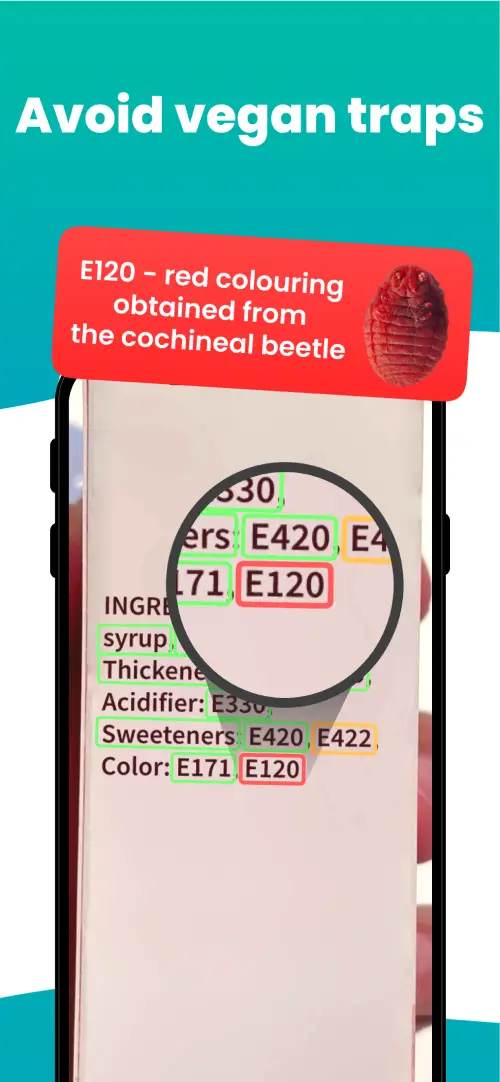
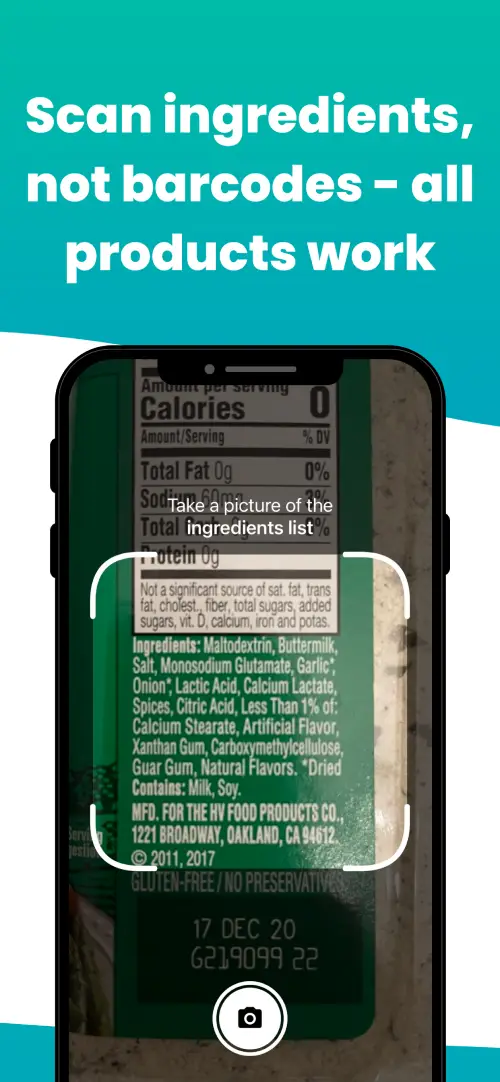
We've built a vegan ingredients scanner that classifies food ingredients as "vegan", "non-vegan", or "potentially vegan".
It allows you to avoid non-vegan ingredients - just take a picture of a product's ingredient list, and the app tells you if the product is vegan or not.

Check out other ingredients:
Is Carboxyméthylcellulose de sodium réticulée e468 vegan?Is Carboxymethylcellulose sodium vegan?Is Cross-linked sodium carboxymethylcellulose vegan?Is Sodium chloride vegan?Is Sódium bicarbonate vegan?Is Sodium laureth sulfate vegan?Is Sodium carbonate vegan?Is Sodium lauryl sulfate vegan?
We'll never send you spam.