
Is dough conditioner vegan?
Dough conditioner is potentially vegan - it can be derived from plants or animals. You should ask the manufacturer for more details.
Checking out an ingredients list? 👇
Vegan Ingredient Checker
Scan labels, check if ingredients are vegan
"You are amazing, this has saved me so much time when grocery shopping!"
— Austin, a user who reached out with feedback
"It's been a great tool since starting my journey! You take a pic of the nutrition/ingredients, and it'll warn you of anything questionable or not vegan. 😁"
— Ashe, a Vegan For Beginners Facebook Group member
"Use a vegan app when you go shopping, I use WhatsVegan."
— Dóra, a Vegan For Beginners Facebook Group member


Learn more
"You are amazing, this has saved me so much time when grocery shopping!"
— Austin, a user who reached out with feedback
"It's been a great tool since starting my journey! You take a pic of the nutrition/ingredients, and it'll warn you of anything questionable or not vegan. 😁"
— Ashe, a Vegan For Beginners Facebook Group member
"Use a vegan app when you go shopping, I use WhatsVegan."
— Dóra, a Vegan For Beginners Facebook Group member
So, what is dough conditioner?
Dough conditioner is a functional label term for any substance or blend added to flour to improve dough handling, texture, volume, and shelf life. Rather than naming a single specific chemical compound, this term encompasses a wide variety of processing aids, including emulsifiers, enzymes, oxidizing agents, and reducing agents. It is most commonly found on the ingredient panels of commercial baked goods such as sliced breads, hamburger buns, bagels, pizza crusts, and packaged pastries.
dough conditioner is possibly vegan because the individual additives used can be derived from plant, synthetic, or animal sources. For instance, common conditioning agents such as mono- and diglycerides and DATEM can be manufactured from plant oils, but they are also frequently rendered from animal fats. Another frequent conditioner, L-cysteine, is sometimes synthesized or fermented by microbes, but it is often extracted from poultry feathers or hog hair. Enzymes such as amylase can likewise originate from fungi and bacteria or from animal tissues. Because standard packaging rarely specifies the exact compounds used or their origins, consumers must look for a third-party vegan certification or contact the food manufacturer directly to verify that the dough conditioner is vegan.
How to quickly find the source of ingredients like dough conditioner?
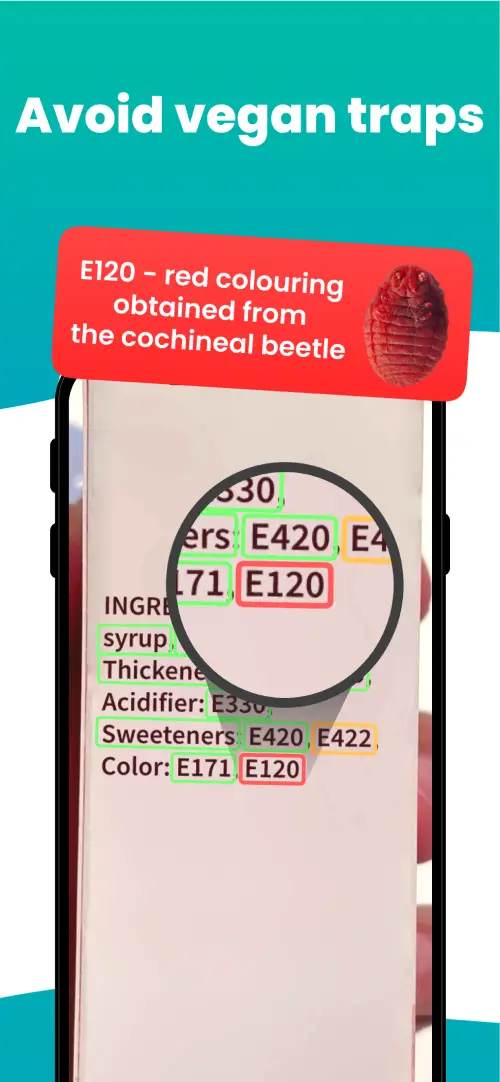
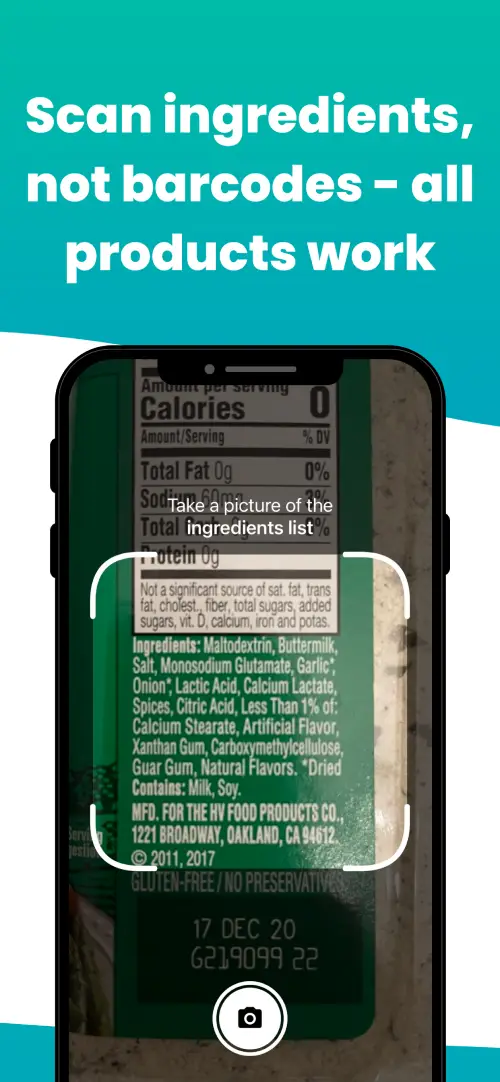
We've built a vegan ingredients scanner that classifies food ingredients as "vegan", "non-vegan", or "potentially vegan".
It allows you to avoid non-vegan ingredients - just take a picture of a product's ingredient list, and the app tells you if the product is vegan or not.

We'll never send you spam.