Is e1412 vegan?
E1412 is a vegan food ingredient.
Checking out an ingredients list? 👇
Vegan Ingredient Checker
Scan labels, check if ingredients are vegan
"You are amazing, this has saved me so much time when grocery shopping!"
— Austin, a user who reached out with feedback
"It's been a great tool since starting my journey! You take a pic of the nutrition/ingredients, and it'll warn you of anything questionable or not vegan. 😁"
— Ashe, a Vegan For Beginners Facebook Group member
"Use a vegan app when you go shopping, I use WhatsVegan."
— Dóra, a Vegan For Beginners Facebook Group member


Learn more
"You are amazing, this has saved me so much time when grocery shopping!"
— Austin, a user who reached out with feedback
"It's been a great tool since starting my journey! You take a pic of the nutrition/ingredients, and it'll warn you of anything questionable or not vegan. 😁"
— Ashe, a Vegan For Beginners Facebook Group member
"Use a vegan app when you go shopping, I use WhatsVegan."
— Dóra, a Vegan For Beginners Facebook Group member
So, what is e1412?
E1412 is the E-number for distarch phosphate, a modified food starch widely utilized as a thickener, binder, and stabilizing agent. It is produced by treating native starch extracted from plant sources, such as maize, potatoes, wheat, or tapioca, with mineral-based cross-linking compounds like sodium trimetaphosphate or phosphorus oxychloride. This chemical modification alters the structure of the starch granules, making them more resilient to high temperatures, acidic environments, and mechanical shear during industrial food processing.
Manufacturers frequently list distarch phosphate in packaged foods such as canned soups, sauces, gravies, salad dressings, fruit pie fillings, and frozen ready meals. It is also added to processed bakery goods, instant noodles, and dairy alternatives to improve texture, control viscosity, and prevent ingredient separation during extended shelf storage.
E1412 is vegan because it is derived entirely from plant starches and treated with inorganic, mineral, or synthetic reagents. Animal tissues, animal by-products, and animal-derived processing aids are not involved at any stage of its extraction or chemical modification.
How to quickly find the source of ingredients like e1412?
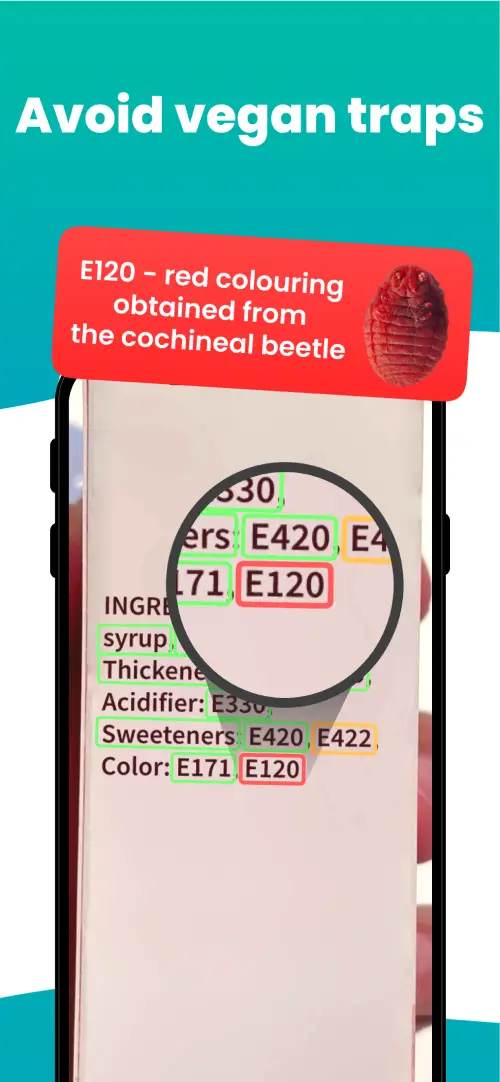
We've built a vegan ingredients scanner that classifies food ingredients as "vegan", "non-vegan", or "potentially vegan".
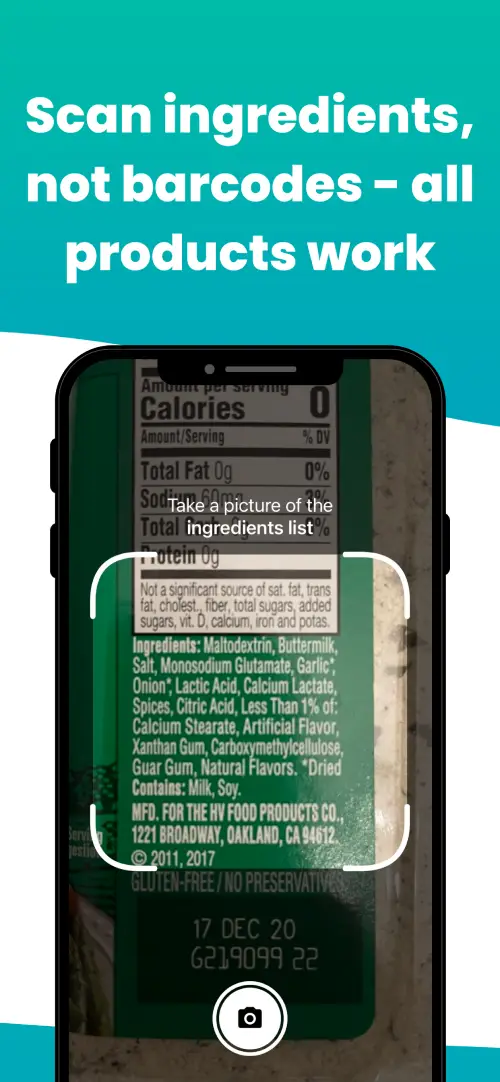
It allows you to avoid non-vegan ingredients - just take a picture of a product's ingredient list, and the app tells you if the product is vegan or not.

We'll never send you spam.