
Is oleic acid vegan?
Oleic acid is potentially vegan - it can be derived from plants or animals. You should ask the manufacturer for more details.
Checking out an ingredients list? 👇
Vegan Ingredient Checker
Scan labels, check if ingredients are vegan
"You are amazing, this has saved me so much time when grocery shopping!"
— Austin, a user who reached out with feedback
"It's been a great tool since starting my journey! You take a pic of the nutrition/ingredients, and it'll warn you of anything questionable or not vegan. 😁"
— Ashe, a Vegan For Beginners Facebook Group member
"Use a vegan app when you go shopping, I use WhatsVegan."
— Dóra, a Vegan For Beginners Facebook Group member


Learn more
"You are amazing, this has saved me so much time when grocery shopping!"
— Austin, a user who reached out with feedback
"It's been a great tool since starting my journey! You take a pic of the nutrition/ingredients, and it'll warn you of anything questionable or not vegan. 😁"
— Ashe, a Vegan For Beginners Facebook Group member
"Use a vegan app when you go shopping, I use WhatsVegan."
— Dóra, a Vegan For Beginners Facebook Group member
So, what is oleic acid?
Oleic acid is a naturally occurring monounsaturated fatty acid found in both animal and vegetable fats. It is commercially produced by the hydrolysis and fractionating of fats and oils. In food manufacturing, oleic acid functions as an emulsifier, texturizer, defoaming agent, and synthetic flavoring agent. It is often listed as an ingredient in commercially baked goods, candy, chewing gum, ice cream, condiments, and nutritional supplements.
Oleic acid is considered possibly vegan because its starting material can come from either plant or animal origins. Plant-based sources include oils extracted from olives, soybeans, peanuts, canola, and sunflower seeds. Animal-based sources typically involve rendered fats such as beef tallow or pork lard. Ingredient labels rarely specify the origin of the acid, meaning consumers cannot determine which source was utilized simply by reading the package. A third-party vegan certification or direct verification from the manufacturer is necessary to confirm that the oleic acid is plant-derived.
How to quickly find the source of ingredients like oleic acid?
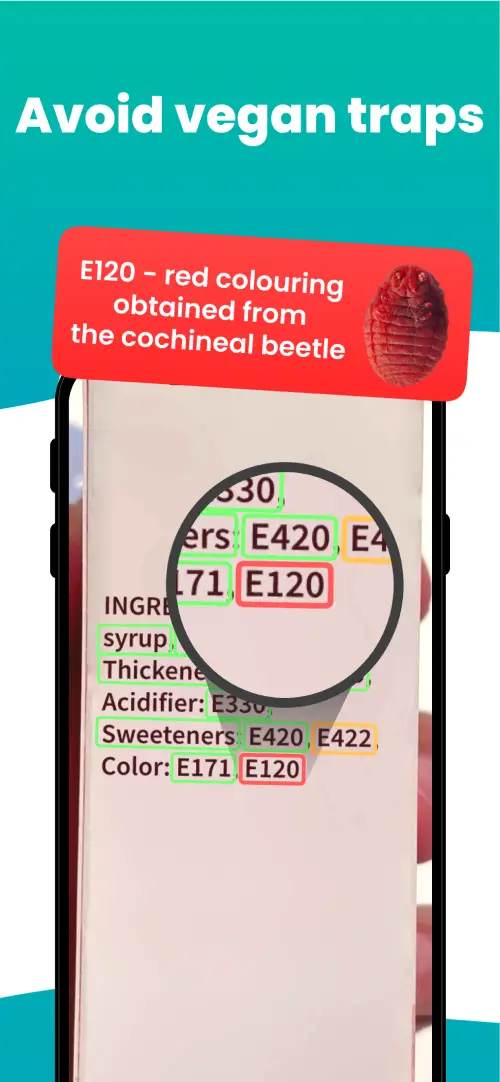
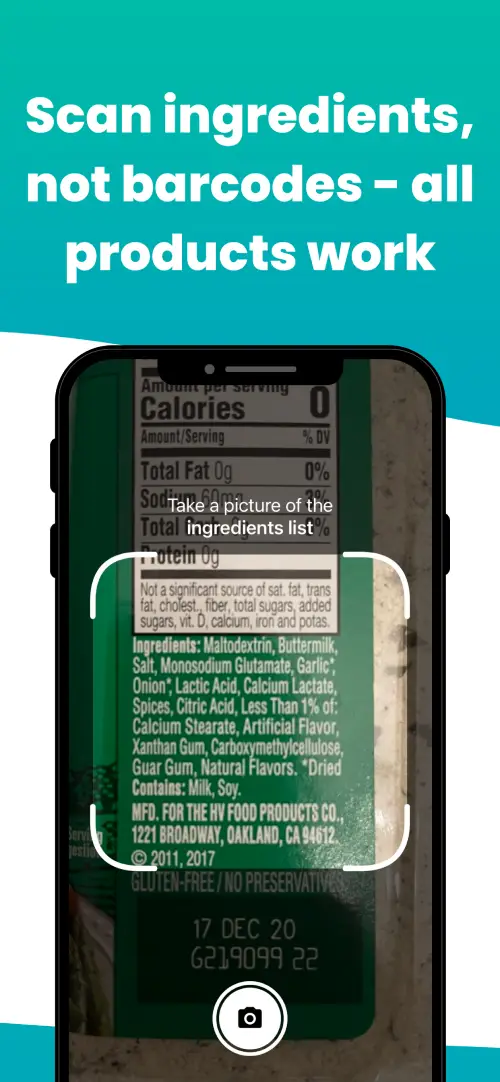
We've built a vegan ingredients scanner that classifies food ingredients as "vegan", "non-vegan", or "potentially vegan".
It allows you to avoid non-vegan ingredients - just take a picture of a product's ingredient list, and the app tells you if the product is vegan or not.

We'll never send you spam.