
Is caribou eye vegan?
Caribou eye is a non-vegan food ingredient.
Checking out an ingredients list? 👇
"You are amazing, this has saved me so much time when grocery shopping!"
— Austin, a user who reached out with feedback
"It's been a great tool since starting my journey! You take a pic of the nutrition/ingredients, and it'll warn you of anything questionable or not vegan. 😁"
— Ashe, a Vegan For Beginners Facebook Group member
"Use a vegan app when you go shopping, I use WhatsVegan."
— Dóra, a Vegan For Beginners Facebook Group member
So, what is caribou eye?
Understanding Caribou Eye: An Ingredient Profile
The landscape of food ingredients is vast and varied, often encompassing components unfamiliar to the wider public. Among these, "caribou eye" presents a unique case, primarily recognized in specific traditional contexts rather than mainstream culinary or food science applications. As we delve into its nature, it becomes immediately clear why this ingredient holds a definitive status within the ethical framework of a vegan diet.
From a scientific standpoint, the caribou eye is precisely what its name denotes: the ocular organ of a caribou (Rangifer tarandus), a species of deer found in Arctic and sub-Arctic regions. Biologically, it is composed of various tissues including muscle, connective tissue, and nerve tissue, rich in proteins, lipids, and water. Its traditional use, where observed, typically involves direct consumption, sometimes raw, as a source of nutrients or for perceived medicinal benefits within certain indigenous cultures.
For those adhering to a vegan lifestyle, the status of caribou eye is unequivocally "Not Vegan." The core principle of veganism rests on the avoidance of all animal products, by-products, and exploitation. The harvesting of a caribou eye necessitates the direct killing of a caribou. This act fundamentally violates the tenets of animal ethics and the pursuit of a cruelty-free existence, which are central to the vegan philosophy. There is no grey area or ambiguity; the ingredient is an inherent part of an animal’s body, obtained through means entirely contrary to vegan principles.
The discussion around ingredients like caribou eye underscores the importance of stringent label transparency in food production. While it is highly improbable to encounter caribou eye in commercially processed foods in most regions, understanding its origin is crucial for informed dietary choices. Consumers seeking plant-based alternatives for any nutritional or experiential aspect must look towards a diverse array of plant-derived foods. For instance, the fatty acids or proteins present in animal organs can be abundantly sourced from flaxseed, chia seeds, walnuts, legumes, and various algae, offering superior ethical standing without compromising on nutritional completeness.
Ultimately, the inclusion of caribou eye in any food item signals a direct departure from a vegan diet. It serves as a stark reminder of the intrinsic link between an ingredient and its source. For the vegan food scientist and conscious consumer alike, the definitive answer remains clear: caribou eye is a non-vegan ingredient, and ethical purity demands its complete exclusion from any plant-based or cruelty-free dietary regimen. The commitment to animal welfare and the integrity of a truly vegan product demands nothing less.
How to quickly find the source of ingredients like caribou eye?
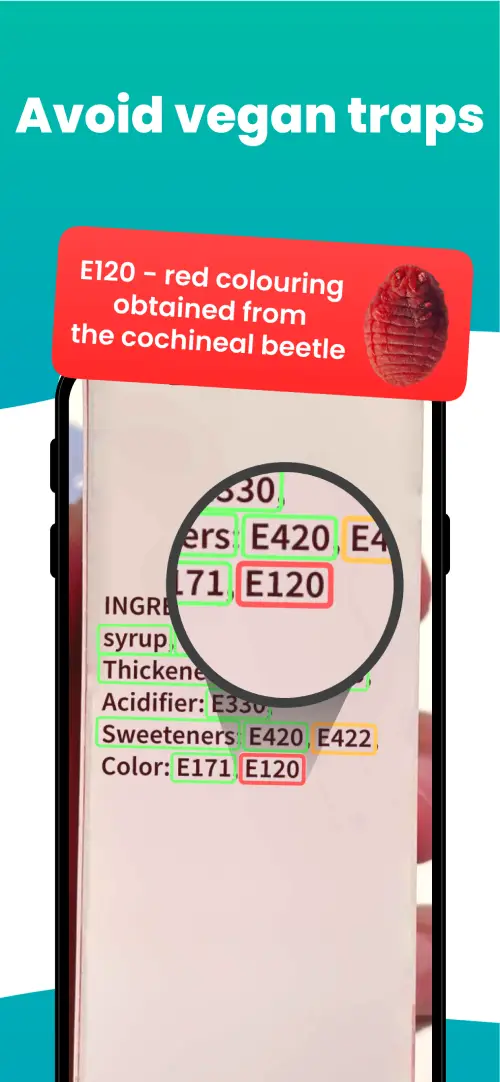
We've built a vegan ingredients scanner that classifies food ingredients as "vegan", "non-vegan", or "potentially vegan".
It allows you to avoid non-vegan ingredients - just take a picture of a product's ingredient list, and the app tells you if the product is vegan or not.




We'll never send you spam.