Is amidon de de vegan?
Amidon de de is a vegan food ingredient.
Checking out an ingredients list? 👇
Vegan Ingredient Checker
Scan labels, check if ingredients are vegan
"You are amazing, this has saved me so much time when grocery shopping!"
— Austin, a user who reached out with feedback
"It's been a great tool since starting my journey! You take a pic of the nutrition/ingredients, and it'll warn you of anything questionable or not vegan. 😁"
— Ashe, a Vegan For Beginners Facebook Group member
"Use a vegan app when you go shopping, I use WhatsVegan."
— Dóra, a Vegan For Beginners Facebook Group member


Learn more
"You are amazing, this has saved me so much time when grocery shopping!"
— Austin, a user who reached out with feedback
"It's been a great tool since starting my journey! You take a pic of the nutrition/ingredients, and it'll warn you of anything questionable or not vegan. 😁"
— Ashe, a Vegan For Beginners Facebook Group member
"Use a vegan app when you go shopping, I use WhatsVegan."
— Dóra, a Vegan For Beginners Facebook Group member
So, what is amidon de de?
"Amidon de de" is a French label fragment and typographical error meaning "starch of," where the preposition "de" has been accidentally duplicated before the intended botanical source. This entry refers to culinary starch, a complex carbohydrate extracted from plant materials such as maize, wheat, potatoes, tapioca, or rice. During commercial manufacturing, the raw plant matter is crushed and washed with water to release the starch granules, which are then separated from plant fibers and proteins through centrifugation and dried into a powder. Food producers commonly utilize starches as thickening agents, stabilizers, and binders in products like gravies, packaged soups, processed snacks, bakery items, and ready meals.
This ingredient is vegan because starch is exclusively produced from botanical sources. Even though the printed phrase is an incomplete or repetitive label error, the underlying substance is plant starch. Animal tissues, dairy derivatives, and animal-derived processing aids are not involved in the extraction or refining of food starches, ensuring that any form of amidon is suitable for a vegan diet.
How to quickly find the source of ingredients like amidon de de?
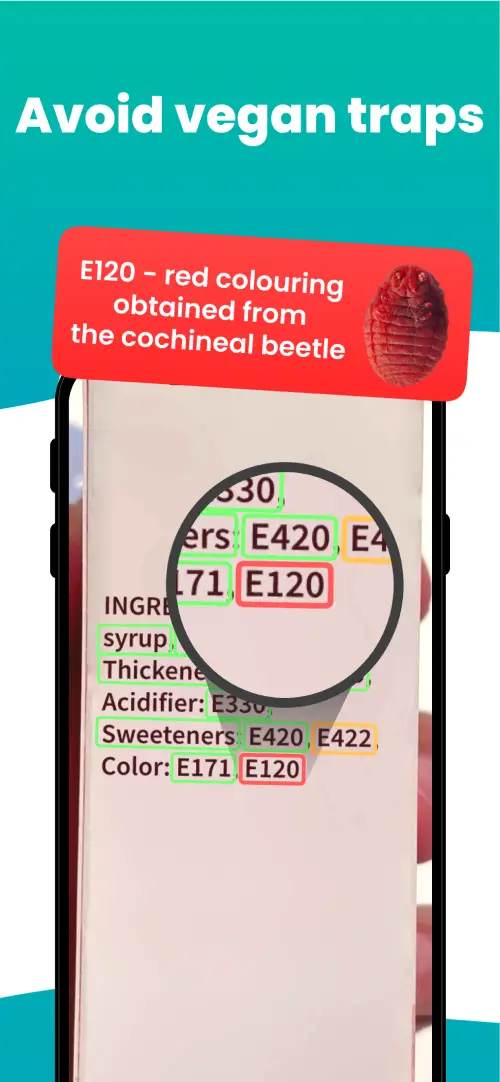
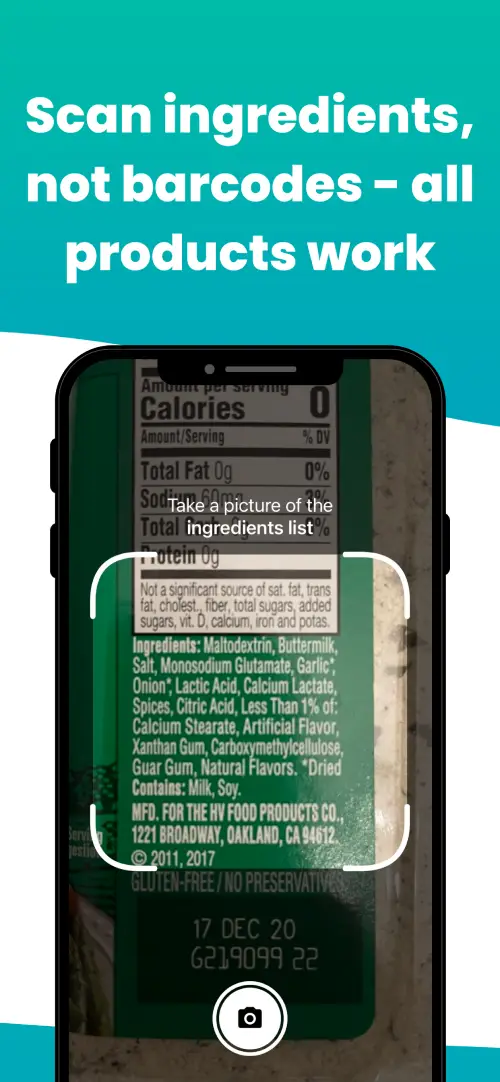
We've built a vegan ingredients scanner that classifies food ingredients as "vegan", "non-vegan", or "potentially vegan".
It allows you to avoid non-vegan ingredients - just take a picture of a product's ingredient list, and the app tells you if the product is vegan or not.

We'll never send you spam.