
Is burnt sugar coloring vegan?
Burnt sugar coloring is a vegan food ingredient.
Checking out an ingredients list? 👇
"You are amazing, this has saved me so much time when grocery shopping!"
— Austin, a user who reached out with feedback
"It's been a great tool since starting my journey! You take a pic of the nutrition/ingredients, and it'll warn you of anything questionable or not vegan. 😁"
— Ashe, a Vegan For Beginners Facebook Group member
"Use a vegan app when you go shopping, I use WhatsVegan."
— Dóra, a Vegan For Beginners Facebook Group member
So, what is burnt sugar coloring?
Decoding Burnt Sugar Coloring: A Vegan Perspective
For those committed to a vegan lifestyle, every ingredient label presents an opportunity for scrutiny, a moment to ensure our choices align with our ethical principles of animal welfare and purity. Amidst the various additives and colorings, "burnt sugar coloring" often appears, prompting questions about its origins and processing. As a vegan food scientist, I can affirm that this particular ingredient stands as a reliable ally in the plant-based pantry.
Burnt sugar coloring, scientifically known as caramel color (often listed as E150a-d in the EU), is precisely what its name implies: sugar that has been heated to produce a rich, brown pigment. The process involves controlled pyrolysis of carbohydrates—typically sucrose, glucose syrup, or maltodextrin—at high temperatures. This thermal treatment initiates a series of complex chemical reactions, including caramelization and Maillard reactions (though the latter is more pronounced with amino acids present), resulting in a spectrum of brown hues. The beauty of this process, from an ethical standpoint, is its inherent simplicity and plant-based foundation.
Crucially, the raw materials for burnt sugar coloring are almost exclusively derived from plants. Common sources include corn, wheat, tapioca, or beet sugar. Unlike some refined white sugars that can pose a "gray area" due to potential bone char filtration in their processing, burnt sugar coloring itself does not require such animal-derived processing aids in its manufacturing. The caramelization process transforms the sugar molecule directly, without relying on external animal agents for its color development or stability. This makes it a genuinely cruelty-free coloring agent.
Its prevalence in the food industry is vast, serving as a natural-looking brown colorant in everything from beverages and baked goods to savory sauces and plant-based meat alternatives. For manufacturers formulating vegan products, burnt sugar coloring is a readily available, effective, and ethically sound choice. It directly contributes to label transparency, offering consumers clarity that the coloring in their product is entirely plant-derived.
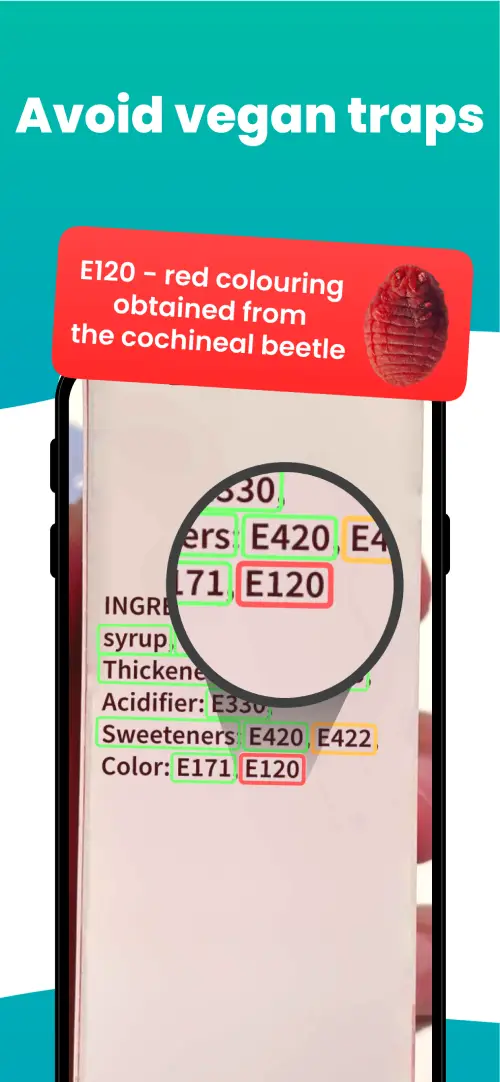
When we consider plant-based alternatives for coloring, burnt sugar coloring is not merely an alternative; it is a fundamental, widely adopted solution. It offers a clean, consistent brown shade without any concern for insect-derived sources like cochineal or carmine, which are unequivocally not vegan. Its origin story is one of pure botanical transformation, yielding a functional ingredient that perfectly aligns with the principles of animal ethics and purity we champion. Its presence in an ingredient list provides reassurance, a clear signal that the product respects the integrity of the plant-based commitment.
How to quickly find the source of ingredients like burnt sugar coloring?
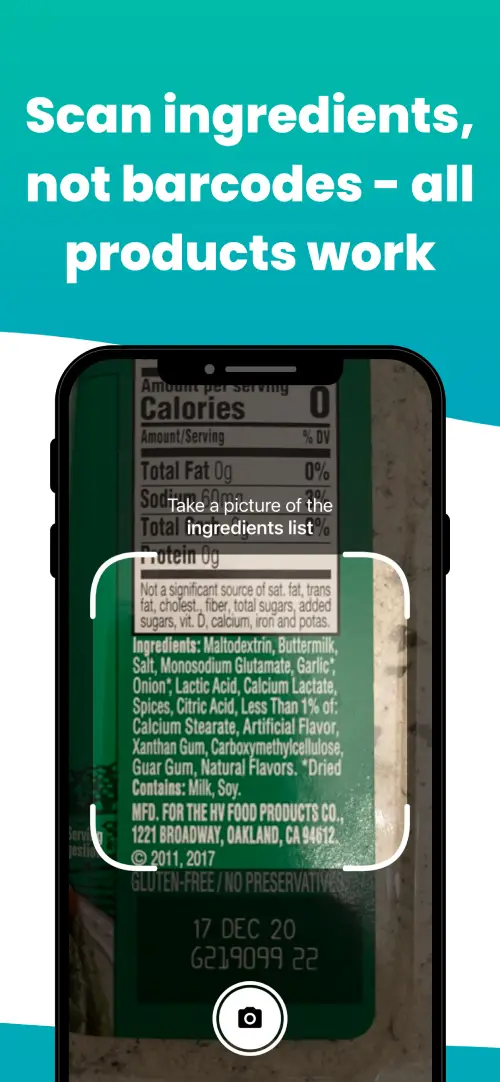
We've built a vegan ingredients scanner that classifies food ingredients as "vegan", "non-vegan", or "potentially vegan".
It allows you to avoid non-vegan ingredients - just take a picture of a product's ingredient list, and the app tells you if the product is vegan or not.



We'll never send you spam.