
Is yogurt-covered vegan?
Yogurt-covered is a non-vegan food ingredient.
Checking out an ingredients list? 👇
"You are amazing, this has saved me so much time when grocery shopping!"
— Austin, a user who reached out with feedback
"It's been a great tool since starting my journey! You take a pic of the nutrition/ingredients, and it'll warn you of anything questionable or not vegan. 😁"
— Ashe, a Vegan For Beginners Facebook Group member
"Use a vegan app when you go shopping, I use WhatsVegan."
— Dóra, a Vegan For Beginners Facebook Group member
So, what is yogurt-covered?
The term "yogurt-covered" often evokes a sense of light indulgence, a creamy, tangy layer enrobing dried fruits, nuts, or pretzels. However, from the rigorous perspective of vegan ethics and food science, this ingredient category is unequivocally non-vegan. Its very definition is rooted in animal-derived components, making it incompatible with a plant-based, cruelty-free diet.
At its core, yogurt is a fermented dairy product. It is traditionally manufactured through the bacterial fermentation of animal milk, most commonly bovine (cow's) milk, but also from other lactating mammals such as goats or sheep. This milk is a biological fluid produced by female animals to nourish their offspring. The commercial dairy industry, irrespective of its scale or specific practices, fundamentally involves the continuous exploitation of these animals for their reproductive cycles and lactational output. This process typically entails artificial insemination, the separation of calves from their mothers, and the eventual slaughter of the animals once their productivity declines. Consequently, any product that contains real yogurt, whether fresh, powdered, or integrated into a coating, directly supports and perpetuates this system of animal agriculture.
Furthermore, vigilance extends beyond the explicit mention of "yogurt." Many products labeled as "yogurt-flavored coatings" can be equally problematic. These formulations often achieve their characteristic texture and taste profile through the inclusion of various dairy derivatives. Common culprits include milk powder, whey protein, casein (a milk protein), and lactose (milk sugar). These ingredients are direct byproducts of milk processing and contribute to the creaminess, structure, and tangy notes sought in such coatings. Even in seemingly small quantities, their presence renders the product non-vegan.
For consumers adhering to a plant-based lifestyle, diligent label transparency is crucial. One must meticulously scrutinize ingredient lists for any mention of milk, cream, butter, cheese, whey, casein, or lactose. The absence of "yogurt" alone does not guarantee a vegan product if these other dairy components are present. The ethical imperative here is to avoid any foodstuff that directly or indirectly contributes to animal exploitation.
Fortunately, the landscape of plant-based alternatives has flourished, offering genuinely cruelty-free options. Innovative food science has developed delicious, creamy coatings derived from various plant sources like oats, almonds, cashews, and coconuts. These plant-based alternatives can provide the desired texture and flavor profiles without any reliance on animal inputs. When seeking a "yogurt-covered" type of snack or ingredient, the only truly safe option is to choose products explicitly labeled as "vegan" or "dairy-free," and always verify the ingredient list to ensure alignment with a pure, compassionate diet.
How to quickly find the source of ingredients like yogurt-covered?
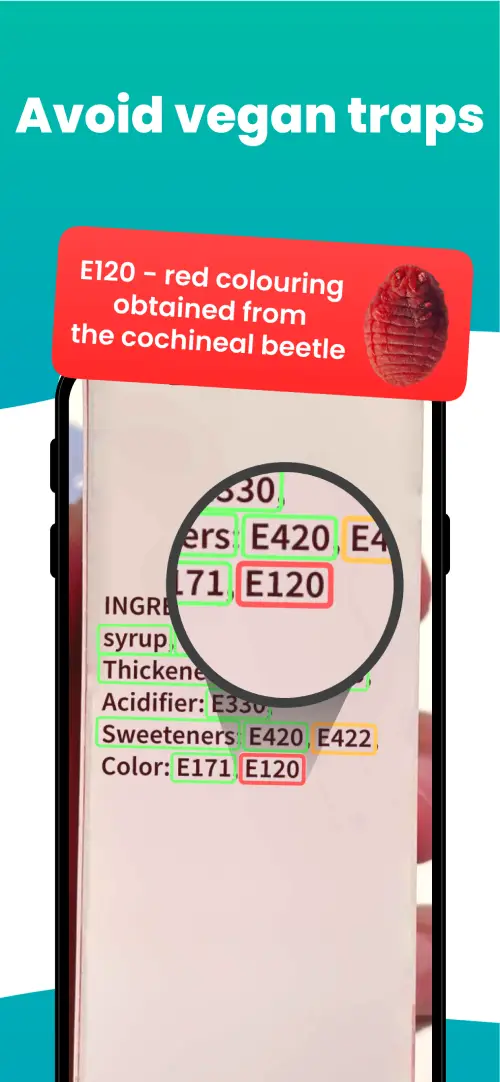
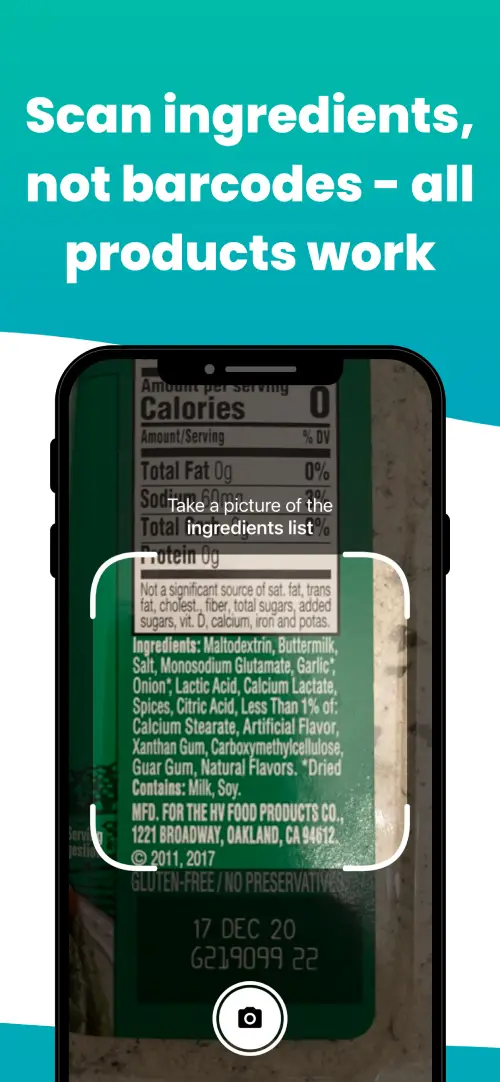
We've built a vegan ingredients scanner that classifies food ingredients as "vegan", "non-vegan", or "potentially vegan".
It allows you to avoid non-vegan ingredients - just take a picture of a product's ingredient list, and the app tells you if the product is vegan or not.



Check out other ingredients:
Is yogurt starter vegan?Is yogurt parfait vegan?Is yogurt liquid vegan?Is yogurt frozen sandwich vegan?Is cultured sour cream vegan?Is yogurt dressing vegan?Is coffee creamer vegan?Are yogurt burst cheerios vegan?Is cookies and cream vegan?Is cream light vegan?Is yoghurt-covered vegan?Is cream sauce vegan?
We'll never send you spam.