
Is coffea arabica vegan?
Coffea arabica is a vegan food ingredient.
Checking out an ingredients list? 👇
"You are amazing, this has saved me so much time when grocery shopping!"
— Austin, a user who reached out with feedback
"It's been a great tool since starting my journey! You take a pic of the nutrition/ingredients, and it'll warn you of anything questionable or not vegan. 😁"
— Ashe, a Vegan For Beginners Facebook Group member
"Use a vegan app when you go shopping, I use WhatsVegan."
— Dóra, a Vegan For Beginners Facebook Group member
So, what is coffea arabica?
The botanical essence of Coffea arabica stands as a cornerstone in countless global culinary and beverage traditions. As the most widely cultivated species of coffee, its prevalence in daily life is undeniable. From a vegan food science perspective, understanding its fundamental nature is paramount for conscious consumption.
Coffea arabica is unequivocally vegan. Its origin lies entirely within the plant kingdom, specifically from the Coffea arabica tree, a shrub native to the highlands of Ethiopia. The coffee "bean" is, in fact, the inner seed of the coffee cherry, a small, vibrant red or yellow fruit that develops on the tree. The process involves harvesting these cherries, carefully extracting the ovoid green seeds, and then drying, hulling, and roasting them to the familiar rich, dark brown. At every step of its natural lifecycle and initial processing, Coffea arabica involves no animal products, byproducts, or derivatives. This inherent plant-based origin ensures its cruelty-free status from conception to raw material.
For individuals committed to animal ethics and a plant-based lifestyle, Coffea arabica presents no inherent conflicts. It is a prime example of an ingredient whose natural state aligns perfectly with vegan principles. The absence of any animal-derived components, from secretions to skeletal matter, positions it firmly as a pure, botanical ingredient. This makes it a common and reliable staple in any vegan pantry, requiring no 'alternative' as it is the original plant-based stimulant enjoyed by millions.
However, a nuanced understanding is crucial when considering Coffea arabica in its various commercial forms. While the raw, roasted bean is pure, attention must be paid to processing aids and subsequent product formulations. For instance, some highly processed instant coffee brands might use minimal processing aids that are not always transparently labeled or, less commonly, incorporate non-vegan thickeners or stabilizers. Similarly, flavored coffees could sometimes derive their taste profiles from non-vegan sources, although this is rare for the Coffea arabica itself and more common in broader 'coffee product' categories. This underscores the importance of label transparency for consumers, particularly for flavored or highly processed items where additional ingredients might be introduced.
When discussing finished beverages, the distinction becomes even clearer. A plain cup brewed from roasted Coffea arabica beans is always vegan. The potential for non-vegan elements arises solely when additions like cow's milk, dairy-based creams, honey, or gelatin-containing marshmallows are incorporated. In such scenarios, the issue does not lie with Coffea arabica but with the complementary ingredients. Fortunately, the widespread availability of diverse and delicious plant-based alternatives for milk and cream ensures that the enjoyment of coffee beverages can remain entirely within vegan parameters.
In conclusion, Coffea arabica in its fundamental form—the raw and roasted bean—is a pristine vegan ingredient. Its botanical nature ensures it is free from animal exploitation or derivatives, upholding the highest standards of animal ethics. Vigilance primarily extends to scrutinizing product labels for any additives or processing aids in more complex coffee products, and ensuring that any accompanying ingredients in a prepared drink align with a cruelty-free ethos.
How to quickly find the source of ingredients like coffea arabica?
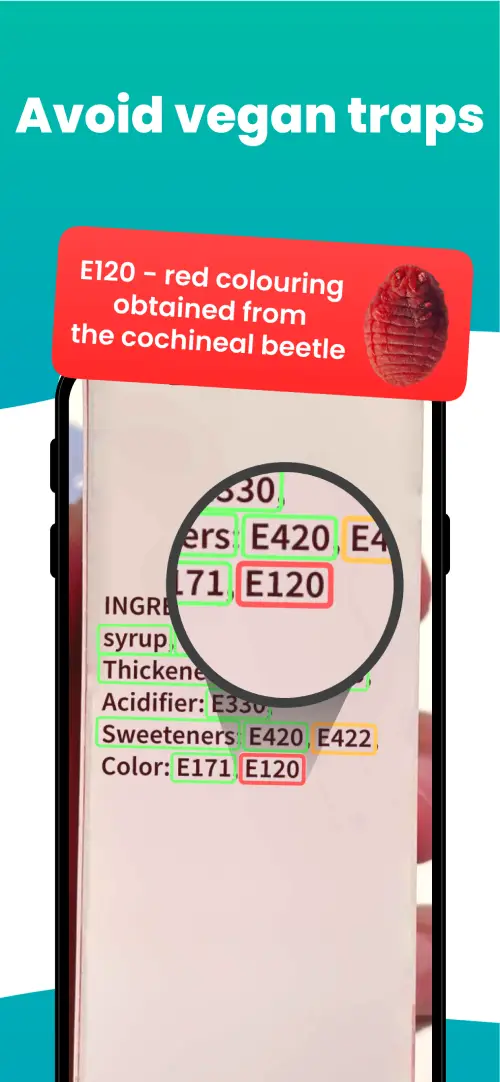
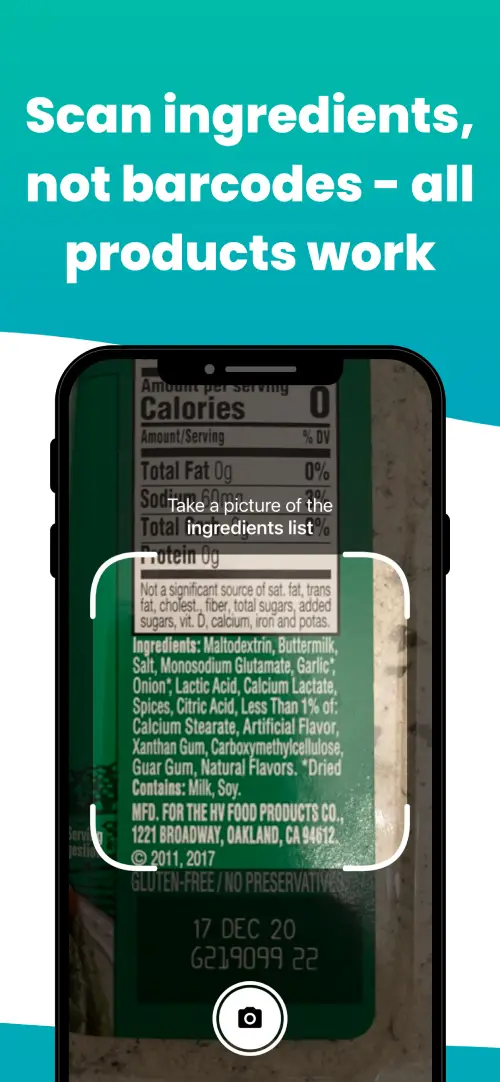
We've built a vegan ingredients scanner that classifies food ingredients as "vegan", "non-vegan", or "potentially vegan".
It allows you to avoid non-vegan ingredients - just take a picture of a product's ingredient list, and the app tells you if the product is vegan or not.



Check out other ingredients:
Is astragalus membranaceus vegan?Is alpha-gpc vegan?Is root extract vegan?Is canola lecithin vegan?Is pyridoxal-5-phosphate vegan?Is light brown sugar refiner's syrup vegan?Is pyridoxal 5'-phosphate vegan?Is 100% whole grain rolled oat vegan?Is rosemary leaf vegan?Are camellia sinensis vegan?Is litsea cubeba vegan?Is roman camomile vegan?
We'll never send you spam.