
Is e280 vegan?
E280 is a vegan food ingredient.
Checking out an ingredients list? 👇
Vegan Ingredient Checker
Scan labels, check if ingredients are vegan
"You are amazing, this has saved me so much time when grocery shopping!"
— Austin, a user who reached out with feedback
"It's been a great tool since starting my journey! You take a pic of the nutrition/ingredients, and it'll warn you of anything questionable or not vegan. 😁"
— Ashe, a Vegan For Beginners Facebook Group member
"Use a vegan app when you go shopping, I use WhatsVegan."
— Dóra, a Vegan For Beginners Facebook Group member


Learn more
"You are amazing, this has saved me so much time when grocery shopping!"
— Austin, a user who reached out with feedback
"It's been a great tool since starting my journey! You take a pic of the nutrition/ingredients, and it'll warn you of anything questionable or not vegan. 😁"
— Ashe, a Vegan For Beginners Facebook Group member
"Use a vegan app when you go shopping, I use WhatsVegan."
— Dóra, a Vegan For Beginners Facebook Group member
So, what is e280?
E280 is the European food additive code for propionic acid, a naturally occurring organic acid used primarily as a preservative. It acts as an antimicrobial agent that inhibits mold and certain bacterial strains, thereby extending the shelf life of food. In grocery items, it is most frequently listed on the ingredient labels of commercially prepared baked goods, such as sliced breads, tortillas, pita, and pastries.
Industrially, propionic acid is manufactured either through chemical synthesis or microbial fermentation. The predominant commercial method involves the chemical oxidation of propionaldehyde or the carbonylation of ethylene derived from petrochemical sources. When produced biologically, bacteria such as Propionibacterium ferment carbohydrate substrates derived from plants.
This additive is vegan because its production relies entirely on synthetic chemical processes or plant-fed microbial fermentation. No animal tissues, animal byproducts, or animal-derived processing aids are used in the manufacturing of E280, making it suitable for a plant-based diet.
How to quickly find the source of ingredients like e280?
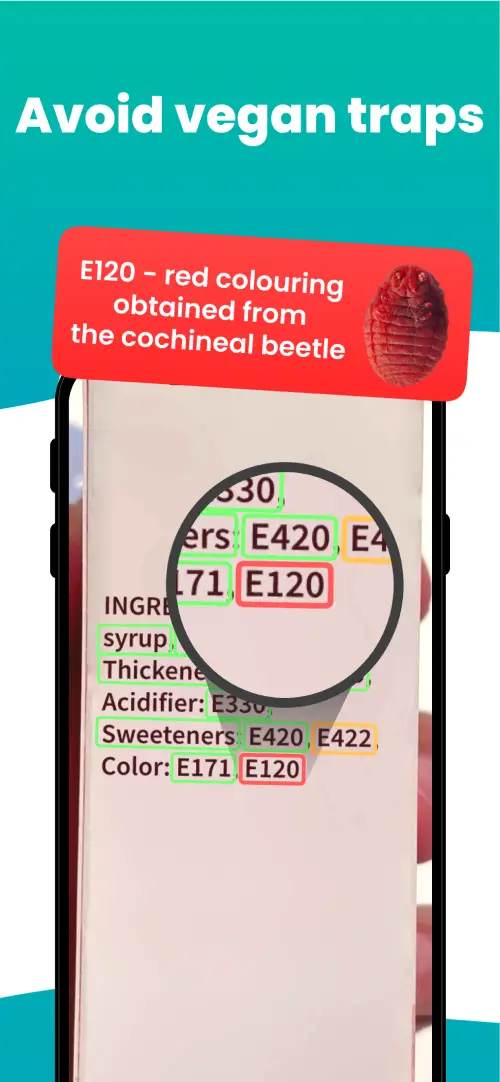
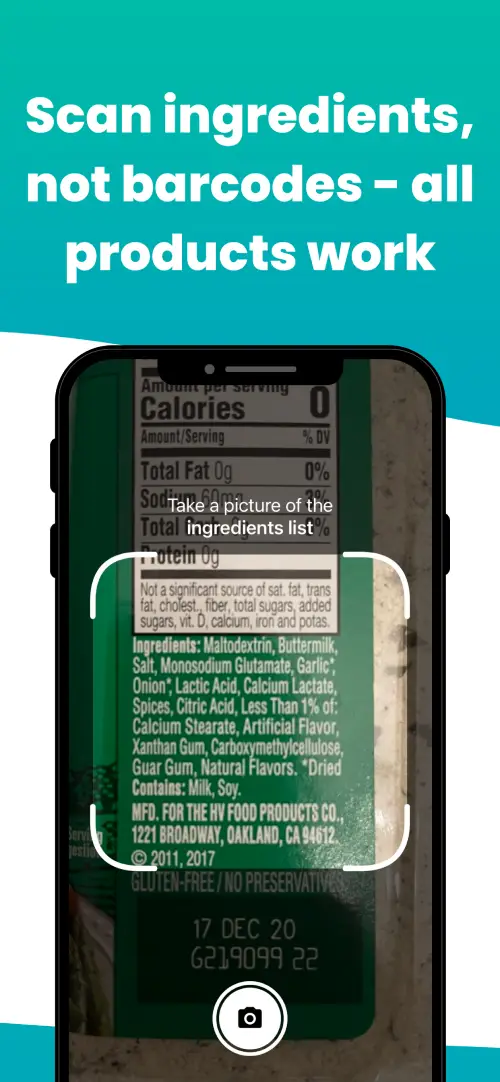
We've built a vegan ingredients scanner that classifies food ingredients as "vegan", "non-vegan", or "potentially vegan".
It allows you to avoid non-vegan ingredients - just take a picture of a product's ingredient list, and the app tells you if the product is vegan or not.

Check out other ingredients:
Is E282 propionate de calcium vegan?Is E285 vegan?Is E270 vegan?
We'll never send you spam.