
Is ferric ferrocyanide vegan?
Ferric ferrocyanide is a vegan food ingredient.
Checking out an ingredients list? 👇
"You are amazing, this has saved me so much time when grocery shopping!"
— Austin, a user who reached out with feedback
"It's been a great tool since starting my journey! You take a pic of the nutrition/ingredients, and it'll warn you of anything questionable or not vegan. 😁"
— Ashe, a Vegan For Beginners Facebook Group member
"Use a vegan app when you go shopping, I use WhatsVegan."
— Dóra, a Vegan For Beginners Facebook Group member
So, what is ferric ferrocyanide?
Navigating the intricate world of food ingredients and their origins is a critical task for anyone committed to animal ethics and a truly plant-based lifestyle. Today, we turn our attention to ferric ferrocyanide, a compound whose scientific name might initially raise questions for the conscientious consumer.
Ferric ferrocyanide, commonly known as Prussian blue when used as a pigment, is a synthetic coordination compound. Chemically, it's an iron-cyanide complex, presenting as a deep blue solid. Its production involves inorganic precursors – iron salts and cyanide sources – which are synthesized through carefully controlled industrial processes. This synthesis is entirely laboratory-based, relying on chemical reactions rather than biological processes or extraction from living organisms.
From a vegan perspective, this synthetic origin is pivotal. There is no involvement of animal-derived materials, byproducts, or testing at any stage of its chemical synthesis. This means that ferric ferrocyanide, in its pure form and as produced industrially, is firmly Vegan. It stands as a testament to the advancements in chemical engineering that allow for the creation of compounds without relying on animal exploitation.
Historically, ferric ferrocyanide has been employed in various capacities. As a pigment (E173 in the EU, or CI 77510), it imparts a rich, deep blue hue. While its use as a direct food colorant is less widespread than other blues, it does find applications in certain niche food products, and more broadly in cosmetics, inks, and paints. Beyond its aesthetic function, ferric ferrocyanide has a unique role in medicine as an antidote for thallium and cesium poisoning, acting as an ion exchanger to bind and excrete these toxic heavy metals.
For the vegan consumer, understanding the provenance of such ingredients is crucial for upholding principles of purity and cruelty-free consumption. When encountering ferric ferrocyanide on an ingredient list, whether in a food item, supplement, or cosmetic, one can rest assured of its animal-free status. It is not a plant-based alternative in the sense of being derived from flora, but rather a synthetically produced compound that meets the strictest vegan criteria.
It's important to distinguish ferric ferrocyanide from other ferrocyanide salts like potassium ferrocyanide (E536) or sodium ferrocyanide (E535), which are often used as anti-caking agents in table salt. While these also share a synthetic, vegan origin, ferric ferrocyanide has distinct chemical properties and primary applications. The consistent thread across these ferrocyanide compounds, however, is their non-animal source, ensuring peace of mind regarding animal ethics.
In an era demanding greater label transparency, recognizing ingredients like ferric ferrocyanide as definitively vegan empowers consumers to make informed choices. This compound exemplifies how advanced chemistry can provide functional ingredients entirely separate from animal agriculture, aligning perfectly with a commitment to a truly plant-based and cruelty-free lifestyle.
How to quickly find the source of ingredients like ferric ferrocyanide?
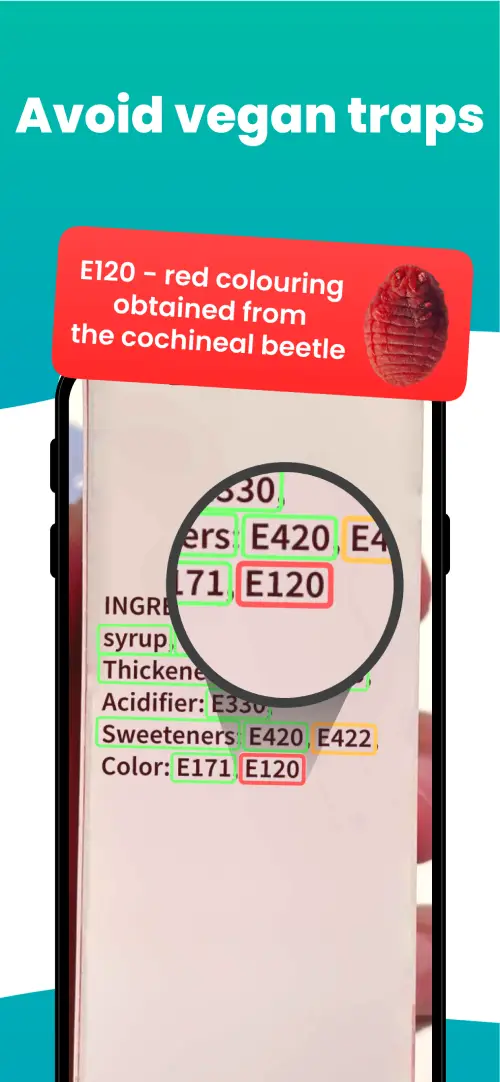
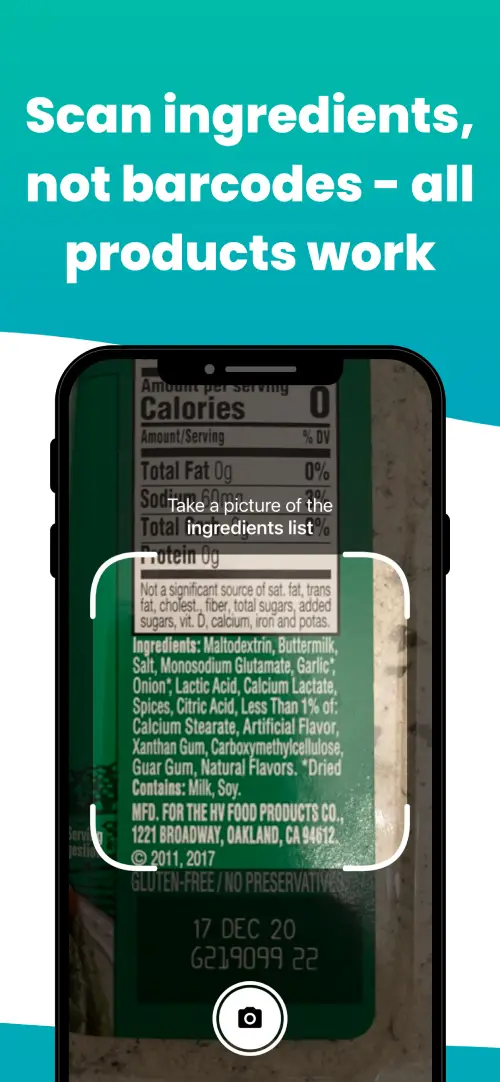
We've built a vegan ingredients scanner that classifies food ingredients as "vegan", "non-vegan", or "potentially vegan".
It allows you to avoid non-vegan ingredients - just take a picture of a product's ingredient list, and the app tells you if the product is vegan or not.



We'll never send you spam.