
Are ultramarines vegan?
Ultramarines is a vegan food ingredient.
Checking out an ingredients list? 👇
"You are amazing, this has saved me so much time when grocery shopping!"
— Austin, a user who reached out with feedback
"It's been a great tool since starting my journey! You take a pic of the nutrition/ingredients, and it'll warn you of anything questionable or not vegan. 😁"
— Ashe, a Vegan For Beginners Facebook Group member
"Use a vegan app when you go shopping, I use WhatsVegan."
— Dóra, a Vegan For Beginners Facebook Group member
So, what is ultramarines?
When navigating the intricate world of ingredients, particularly within vegan food science and ethical consumerism, understanding the true origin and processing of each component is paramount. Ultramarines, often recognized for their striking blue, violet, pink, and green hues, frequently appear in various applications, from cosmetics to art supplies. For those committed to a lifestyle free from animal exploitation, their status is a critical inquiry.
The Composition and Genesis of Ultramarines
Ultramarines are a class of inorganic pigments, primarily composed of complex sodium aluminosulfosilicates. Historically, the deep blue pigment, known as "ultramarine blue," was laboriously extracted from the semi-precious mineral lapis lazuli. However, modern ultramarines are almost exclusively produced synthetically. This synthetic process involves heating kaolin clay, sodium carbonate, sulfur, and other materials in precise conditions, yielding vibrant pigments that are chemically identical to their mineral counterparts but far more consistent and cost-effective to produce.
An Unquestionably Vegan Ingredient
From an ethical and scientific standpoint, ultramarines are definitively vegan. Their composition is purely mineral-derived, or, more commonly, synthetically replicated from inert mineral compounds. There are absolutely no animal components, byproducts, or animal-derived substances involved at any stage of their manufacturing process. This intrinsic lack of animal input makes ultramarines a clear and unimpeachable choice for vegan formulations.
Unlike certain other colorants whose origins might involve insects (such as carmine from cochineal, which is secreted by the lac insect) or animal bones (like some char-processed sugars), ultramarines stand apart as a naturally cruelty-free option. Their genesis is entirely separate from the animal kingdom, ensuring that their inclusion in a product aligns perfectly with the principles of animal ethics and purity.
Addressing the Nuances of Vegan Sourcing
In the broader context of ingredient sourcing, discussions often arise regarding "processing aids" or potential "cross-contamination." For ultramarines, the manufacturing pathway is generally straightforward and free from these concerns pertaining to animal inputs. The raw materials used in their synthesis—clays, salts, and sulfur—are themselves inorganic and thus inherently vegan. There is no typical use of animal-derived processing aids in their production.
This makes them a preferred choice over many natural pigments which might require animal-derived stabilizers or clarifiers, or whose extraction methods might inadvertently involve animal products. For formulators seeking truly plant-based alternatives to animal-derived colorants, ultramarines offer a reliable, vibrant, and ethically sound solution.
Label Transparency and Ethical Assurance
The transparent, synthetic-mineral origin of ultramarines simplifies their identification for both manufacturers and consumers. Products listing "Ultramarines" as an ingredient can be confidently considered free from animal-derived components in this specific regard. This clarity supports robust label transparency, allowing consumers to make informed choices with peace of mind, knowing they are supporting products that uphold cruelty-free standards.
In conclusion, ultramarines exemplify an ingredient that seamlessly integrates into vegan product development. Their synthetic mineral origin, devoid of any animal involvement from source to final product, positions them as a unequivocally ethical and pure choice, allowing for vibrant color without compromise to animal welfare principles.
How to quickly find the source of ingredients like ultramarines?
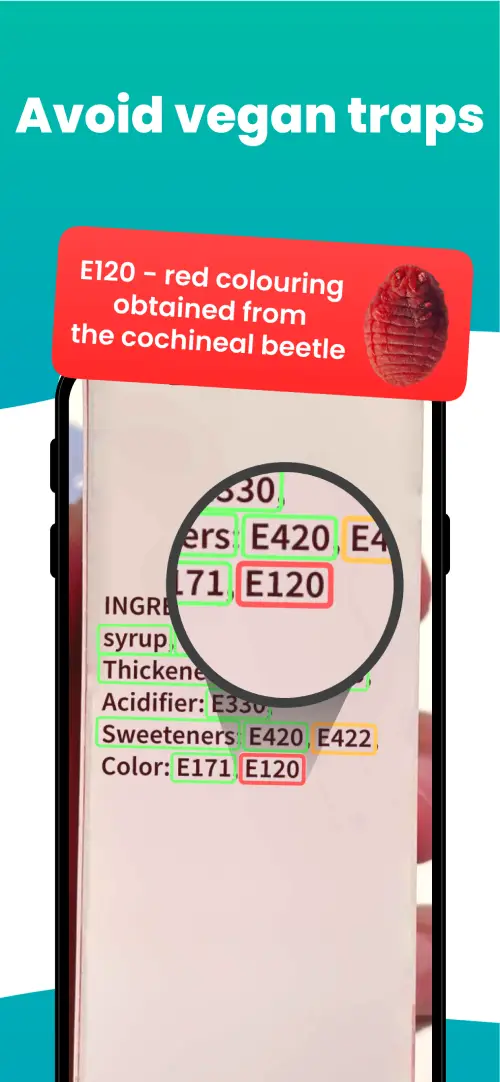
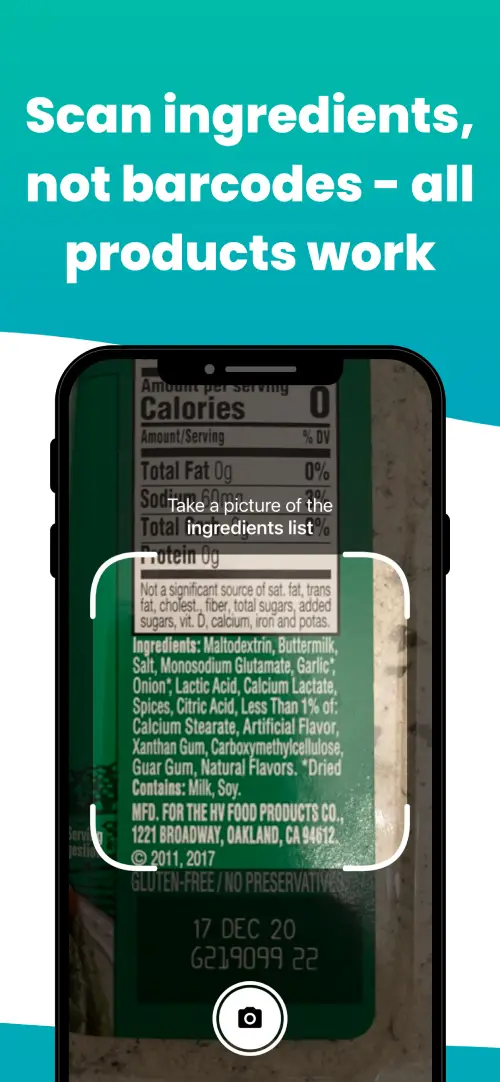
We've built a vegan ingredients scanner that classifies food ingredients as "vegan", "non-vegan", or "potentially vegan".
It allows you to avoid non-vegan ingredients - just take a picture of a product's ingredient list, and the app tells you if the product is vegan or not.



We'll never send you spam.