
Are glass beads vegan?
Glass beads is a vegan food ingredient.
Checking out an ingredients list? 👇
"You are amazing, this has saved me so much time when grocery shopping!"
— Austin, a user who reached out with feedback
"It's been a great tool since starting my journey! You take a pic of the nutrition/ingredients, and it'll warn you of anything questionable or not vegan. 😁"
— Ashe, a Vegan For Beginners Facebook Group member
"Use a vegan app when you go shopping, I use WhatsVegan."
— Dóra, a Vegan For Beginners Facebook Group member
So, what is glass beads?
Glass Beads: An Examination of Their Role and Vegan Suitability
Glass beads, a seemingly industrial component, occasionally spark questions within the realm of food production and ingredient transparency. Understanding their composition and function is key to determining their alignment with a vegan lifestyle and ethical food choices. Primarily composed of silica, a natural mineral found abundantly as sand, along with other common minerals like soda ash and limestone, glass beads are fundamentally inert and inorganic.
From a vegan perspective, glass beads are definitively Vegan. Their production relies entirely on mineral resources, with no involvement of animal products, byproducts, or animal testing at any stage of their manufacture. This stands in stark contrast to certain processing aids or ingredients that might derive from animal sources, such as gelatin (from animal collagen) or bone char (used in some sugar refining). Therefore, when considering the purity and ethical sourcing of materials involved in food systems, glass beads present a clear and unproblematic choice.
While not a food ingredient themselves, and certainly not a "plant-based alternative" to a dietary component, their very inertness and synthetic origin make them an exemplary choice for supporting plant-based food systems. They are not intended for consumption, but rather serve crucial roles as processing aids within food manufacturing. Their smooth, non-porous surface and high heat resistance make them valuable for a variety of applications.
For instance, in milling and grinding processes, small glass beads can be used to facilitate particle size reduction for spices, grains, or other plant-based materials. Their hardness and uniform shape ensure efficient processing without introducing unwanted contaminants or residues. They are also employed in certain filtration systems, acting as a neutral bed material to help clarify liquids or separate components. In chromatography, a technique used for separating and analyzing mixtures, glass beads can serve as a stationary phase or column packing, ensuring the purity and integrity of plant extracts or other food compounds.
The "why" behind their vegan status is straightforward: they are synthesized from geological raw materials. There is no biological origin, no animal suffering, and no exploitation associated with their creation. This aligns perfectly with the core tenets of animal ethics that define veganism. Their use in food processing ensures that the foods produced with their aid maintain a cruelty-free status, as the tools themselves are free from animal-derived components.
In an era emphasizing label transparency and clean ingredient lists, understanding the role of processing aids like glass beads is vital, even if they don't appear on the final product label. Their function is purely mechanical or structural, facilitating a process rather than contributing substance to the food itself. For consumers dedicated to ethical sourcing, the assurance that even the ancillary materials used in their food's journey are animal-free provides peace of mind. Glass beads exemplify a material that, through its fundamental composition and production, fully supports the integrity and principles of vegan food manufacturing.
How to quickly find the source of ingredients like glass beads?
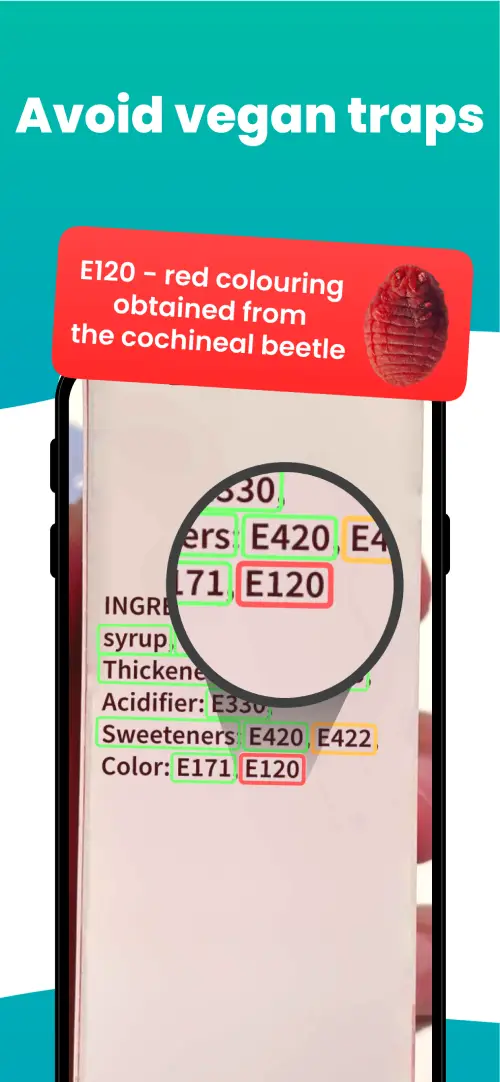
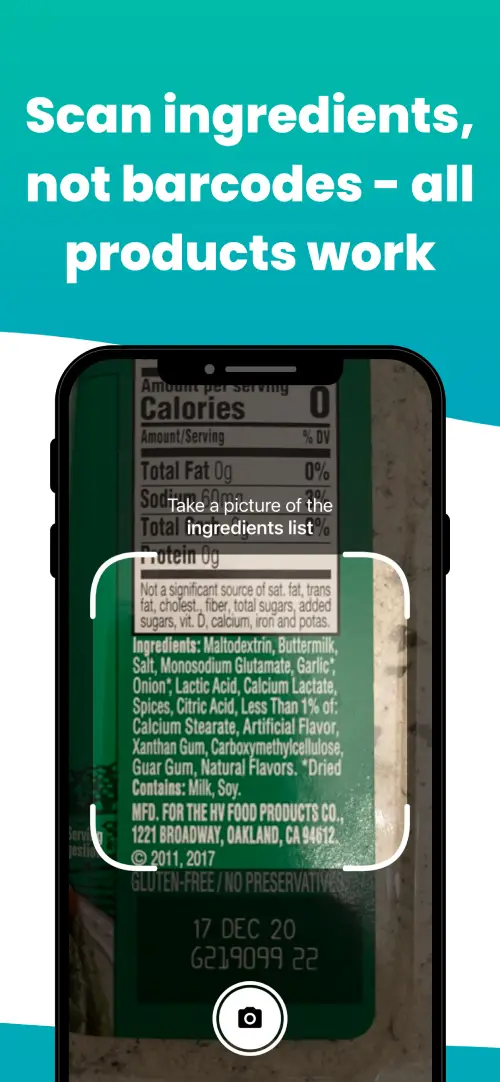
We've built a vegan ingredients scanner that classifies food ingredients as "vegan", "non-vegan", or "potentially vegan".
It allows you to avoid non-vegan ingredients - just take a picture of a product's ingredient list, and the app tells you if the product is vegan or not.



Check out other ingredients:
Is bronze powder vegan?Is tin oxide vegan?Is ci 77163 vegan?Is polyurethane-11 vegan?Is ci 77000 vegan?Is isoprene copolymer vegan?Is ci 77007 vegan?Is calcium titanium borosilicate vegan?Are ultramarines vegan?Is pyridoxine hcl vegan?Is brewed tea vegan?Is ocimum sanctum vegan?
We'll never send you spam.