
Is aluminum powder vegan?
Aluminum powder is a vegan food ingredient.
Checking out an ingredients list? 👇
"You are amazing, this has saved me so much time when grocery shopping!"
— Austin, a user who reached out with feedback
"It's been a great tool since starting my journey! You take a pic of the nutrition/ingredients, and it'll warn you of anything questionable or not vegan. 😁"
— Ashe, a Vegan For Beginners Facebook Group member
"Use a vegan app when you go shopping, I use WhatsVegan."
— Dóra, a Vegan For Beginners Facebook Group member
So, what is aluminum powder?
Understanding Elemental Purity: Aluminum Powder
When scrutinizing ingredients through the lens of vegan ethics and scientific rigor, aluminum powder presents a straightforward case. As an elemental substance, its origin and composition are inherently free from animal involvement, positioning it firmly within a vegan framework.
Aluminum (Al) is a ubiquitous metal, the third most abundant element in the Earth's crust, primarily extracted from bauxite ore. Its journey from raw material to a finely milled powder involves purely physical and chemical processes. Bauxite is refined to alumina (aluminum oxide), which is then subjected to electrolysis to yield pure aluminum metal. This metal is subsequently atomized or ground into a fine powder, characterized by its distinctive silvery-gray luster and fine, uniform texture. At no stage in its extraction, refining, or pulverization are animal products or byproducts utilized, nor is there any requirement for animal testing to ascertain its fundamental properties. This direct lineage from mineral to finished powder underscores its intrinsic vegan status.
From an ethical perspective, aluminum powder aligns seamlessly with cruelty-free principles. Its production chain does not necessitate the exploitation, harm, or use of any sentient beings. There are no concerns regarding animal-derived processing aids, such as gelatin often found in some pharmaceutical capsules or bone char used in certain sugar refining processes, as these simply do not pertain to the manufacturing of an elemental metal powder. The purity of its source material and manufacturing methods ensure that its presence in a product does not conflict with a commitment to animal welfare.
While aluminum powder finds extensive application across various industrial sectors – from paints and coatings to pyrotechnics and metallurgy – its use as a direct ingredient in food is highly specialized and subject to stringent regulations. In some regions, elemental aluminum (E173) has been historically permitted as a decorative food colorant for the external coating of certain confectionery or baked goods, rather than as a substantive ingredient. However, due to ongoing research into its bioaccumulation and potential health implications, its application in edible items is often restricted or banned in many markets. For those prioritizing whole, minimally processed, plant-based foods, such decorative elements are rarely a focus. Regardless of its specific application, its fundamental vegan nature remains constant.
For consumers dedicated to label transparency and ethical sourcing, understanding the elemental origin of ingredients like aluminum is crucial. Unlike complex compounds or extracts that might hide animal-derived components or processing aids, aluminum powder's elemental nature offers clarity. There are no plant-based alternatives to an element itself; rather, its very existence as a naturally occurring metal defines its non-animal origin. This clarity empowers consumers to make informed choices, reinforcing confidence in products formulated with attention to both purity and animal ethics.
How to quickly find the source of ingredients like aluminum powder?
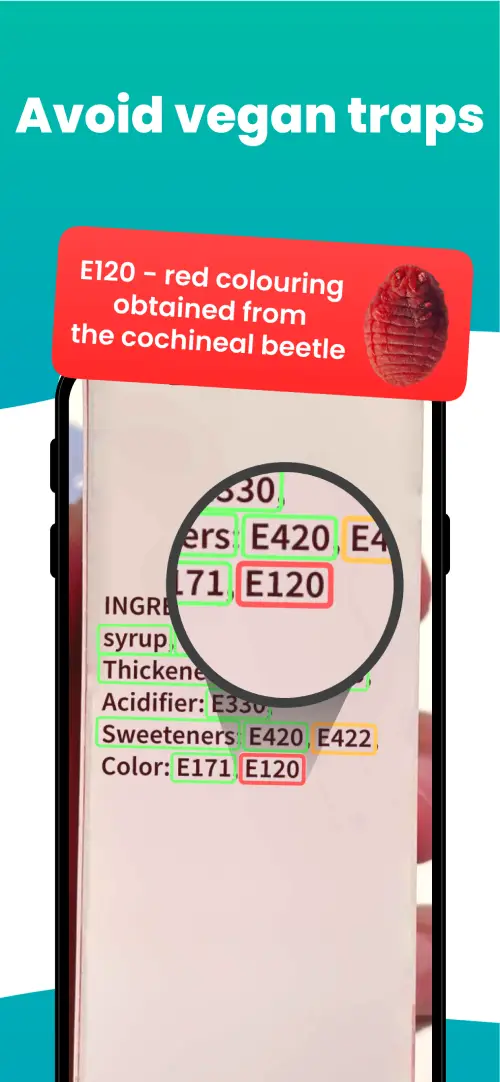
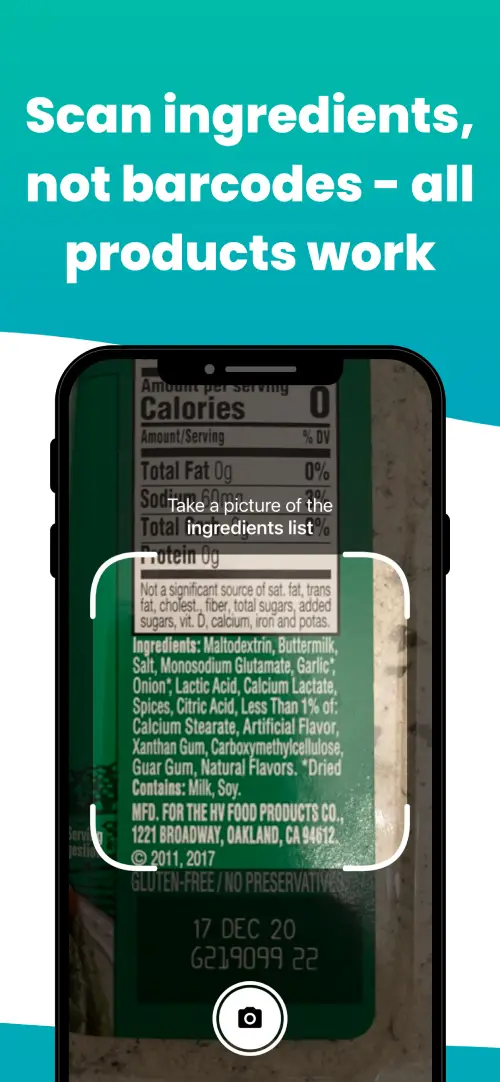
We've built a vegan ingredients scanner that classifies food ingredients as "vegan", "non-vegan", or "potentially vegan".
It allows you to avoid non-vegan ingredients - just take a picture of a product's ingredient list, and the app tells you if the product is vegan or not.



We'll never send you spam.