
Is d&c red 33 vegan?
D&c red 33 is a vegan food ingredient.
Checking out an ingredients list? 👇
"You are amazing, this has saved me so much time when grocery shopping!"
— Austin, a user who reached out with feedback
"It's been a great tool since starting my journey! You take a pic of the nutrition/ingredients, and it'll warn you of anything questionable or not vegan. 😁"
— Ashe, a Vegan For Beginners Facebook Group member
"Use a vegan app when you go shopping, I use WhatsVegan."
— Dóra, a Vegan For Beginners Facebook Group member
So, what is d&c red 33?
D&C Red 33: An Ingredient Examination for the Vegan Palate
The pursuit of a truly vegan lifestyle extends beyond primary ingredients, delving deep into the often-obscure world of additives, processing aids, and colorants. For those committed to animal ethics and purity, understanding each component is paramount. D&C Red 33 is one such colorant that frequently prompts inquiry, and its place in the vegan pantry is unequivocally clear.
D&C Red 33 is a synthetic azo dye, meaning its vibrant crimson hue is achieved through chemical synthesis rather than extraction from natural sources. From a vegan food scientist's perspective, this is a critical distinction. Its foundational components are derived from petroleum, undergoing a series of controlled chemical reactions to produce the stable, water-soluble pigment. Crucially, at no stage of its manufacturing process are animal products or byproducts utilized. This clean synthetic origin is the bedrock of its vegan status.
Many red colorants carry a historical baggage of animal derivation, most notably carmine or cochineal extract, which is famously sourced from the female cochineal insect. This association often leads to a blanket suspicion of all red dyes among ethical consumers. However, D&C Red 33 stands apart. It represents a chemically distinct compound, a conscious development in color science that offers product developers a reliable red hue without recourse to insect or other animal exploitation. It is not a "plant-based alternative" in the sense of being derived from a botanical source itself, but rather a synthetic vegan alternative to animal-derived colorants, serving the same functional purpose without compromising ethical purity.
Its stability and consistent coloration make it a valuable tool in formulations where natural plant-based alternatives might present challenges. For instance, while beetroot powder offers a natural red, it can be susceptible to heat degradation, pH shifts, and can impart a distinct earthy flavor that isn't always desirable. Similarly, anthocyanins from sources like red cabbage or grape skin extract are highly pH-sensitive, shifting from red to purple or blue depending on the acidity of the food matrix. D&C Red 33, in contrast, delivers a predictable, bright red across a wider range of applications, enabling the creation of visually appealing plant-based products that align with consumer expectations for vibrancy.
For the conscientious consumer, label transparency is key. When you encounter D&C Red 33 on an ingredient list, you can be confident that the color itself does not contain any animal-derived components. While the broader "cruelty-free" discussion often encompasses animal testing, the ingredient's origin regarding animal input is pure. This clarity allows product formulators to achieve desirable aesthetics in plant-based foods, beverages, and cosmetics, ensuring that the visual appeal does not come at the expense of animal welfare.
In essence, D&C Red 33 is a testament to synthetic chemistry providing ethically sound solutions. It offers a reliable and pure red colorant, affirming its place as a truly vegan-friendly option, free from animal inputs and a valuable asset in the expanding world of compassionate consumption.
How to quickly find the source of ingredients like d&c red 33?
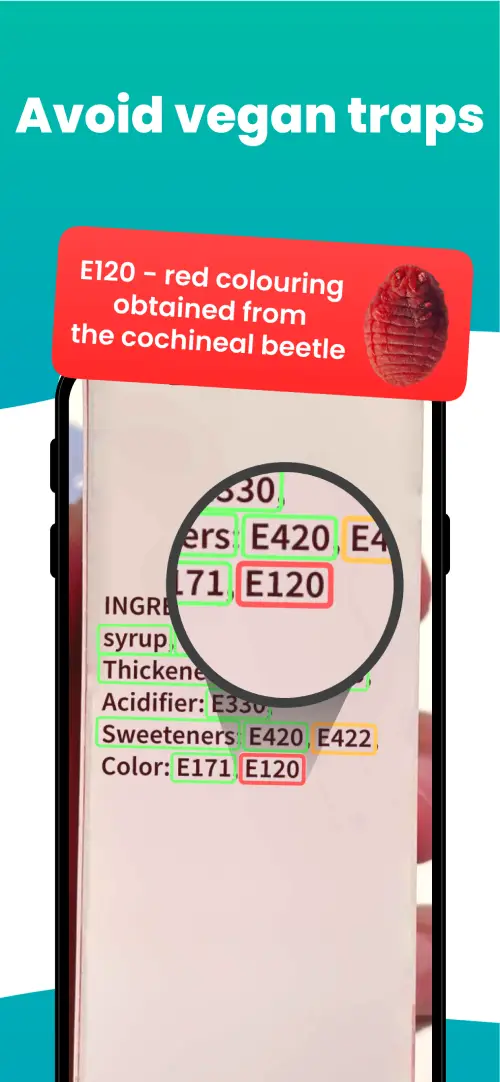
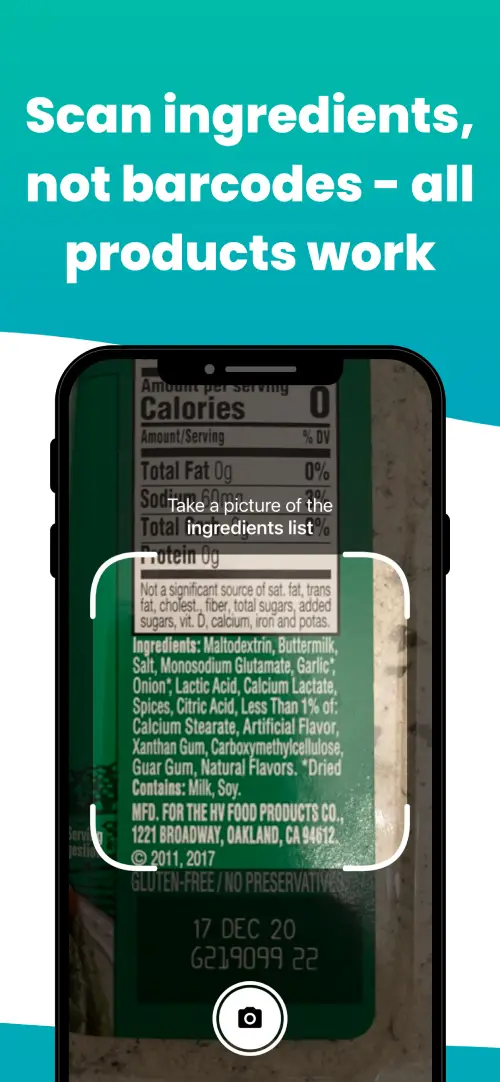
We've built a vegan ingredients scanner that classifies food ingredients as "vegan", "non-vegan", or "potentially vegan".
It allows you to avoid non-vegan ingredients - just take a picture of a product's ingredient list, and the app tells you if the product is vegan or not.



We'll never send you spam.